
Starting Testosterone Replacement Therapy (TRT) can lead to unexpected breakouts on the shoulders, chest, or jawline. While acne is often associated with teenage years, adult breakouts are one of the most common dermatologic side aeffects of testosterone therapy.
Men taking higher doses of testosterone face an elevated risk of developing acne, but breakouts can happen at any therapeutic dose. Understanding why this occurs—especially for men in their 50s and beyond—is essential to managing skin health without compromising hormonal optimization.

The Biological Mechanism: Why TRT Triggers Breakouts
The skin functions as a peripheral endocrine organ, containing dense clusters of androgen receptors within hair follicles and sebaceous glands.
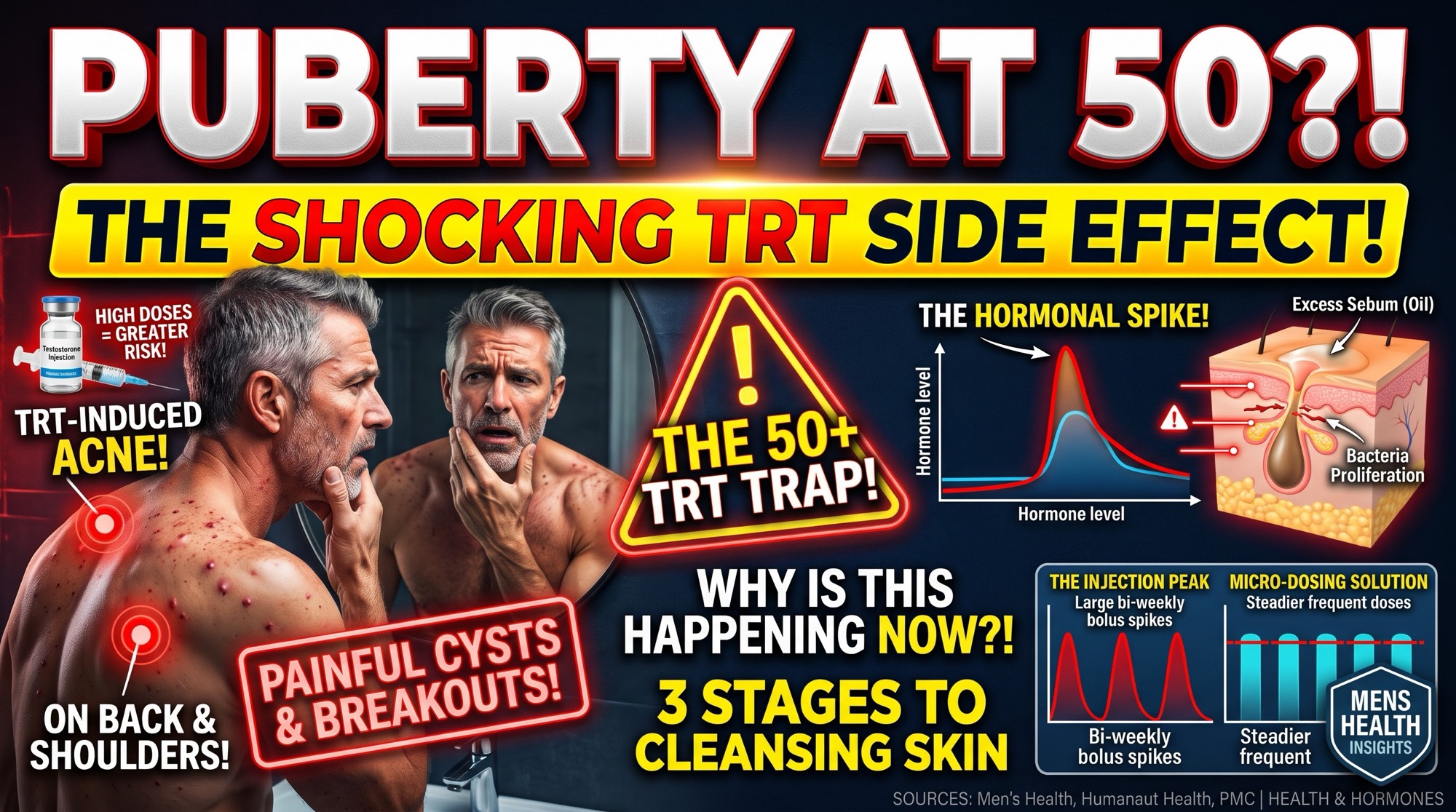
- Sebum Overproduction: Exogenous testosterone converts locally in the skin into dihydrotestosterone (DHT) via the 5-alpha reductase enzyme. DHT stimulates sebaceous glands to produce excess sebum (oil).
- Follicular Hyperkeratinization: Elevated androgens increase the turnover rate of skin cells inside pores. When excess sebum mixes with dead skin cells, it forms a plug (comedone).
- Bacterial Proliferation: The blocked follicle becomes an anaerobic, nutrient-rich environment where Cutibacterium acnes bacteria proliferate, triggering inflammation, pustules, and deep cystic lesions.
Why Men Over 50 Experience Acne on TRT
Men over 50 often find TRT-related acne surprising because natural age-related hormonal decline typically causes dry, thinning skin due to reduced sebum and collagen synthesis. When introducing exogenous testosterone, several aging-specific factors come into play:
- Sudden Hormonal Shift: After decades of gradual androgen decline, a rapid increase in circulating testosterone and DHT reactivates dormant sebaceous glands, catching the aging epidermal barrier unprepared.
- The Injection Peak Effect: Many men receive bi-weekly or weekly intramuscular injections. These protocols can produce supraphysiological hormone spikes in the first 48 to 72 hours, stimulating severe oil spikes compared to the steadier absorption seen with daily transdermal gels.
- Compromised Skin Barrier: Older skin has a slower cellular turnover rate and a more fragile moisture barrier. Traditional aggressive teenage acne washes that strip oil can cause severe rebound oil production, dehydration, and increased skin irritation.
- Truncal Distribution: While adolescent acne concentrates on the face, TRT-induced breakouts in older men predominantly target “truncal” regions—the upper back, trapezius line, shoulders, and chest—where androgen receptor density remains highest.
Treatment and Management Strategies
Developing breakouts does not mean you have to stop TRT. Addressing the issue involves targeted skin care and hormone protocol reviews:
- Adjust TRT Administration: Discuss your protocol with your prescribing physician. Micro-dosing (administering smaller injections two to three times per week rather than a large bi-weekly bolus) flattens hormonal peaks and troughs, which often calms sebaceous overactivity.
- Topical Retinoids: Incorporating prescription retinoids (such as tretinoin or adapalene) helps normalize cell turnover in older skin and unclogs pores while supporting dermal collagen.
- Antibacterial Cleansers: Use a gentle 4% to 5% benzoyl peroxide wash or salicylic acid cleanser for the chest and back. Avoid harsh scrubbing brushes that aggravate inflammation.
- Post-Workout Hygiene: Men over 50 on TRT often experience increased thermogenesis and sweating during strength workouts. Change out of synthetic gym clothing immediately and rinse off to prevent sweat from trapping bacteria in dilated pores.
- Targeted Clinical Interventions: For moderate-to-severe cystic acne resistant to topicals, dermatologists may prescribe short-course oral tetracyclines (such as doxycycline) or topical androgen receptor inhibitors (such as clascoterone) without disrupting systemic hormone levels.
Sources & Clinical Reading:
- Men’s Health: Is Your Testosterone Replacement Therapy Causing Acne?
- Humanaut Health: Does TRT Cause Acne? Causes, Risk Factors, and Clinical Options
- National Institutes of Health (PMC): Modulating Testosterone Pathway and Male Skin Physiology
- Ways2Well: Testosterone and Skin Health Management
Leave a Reply