
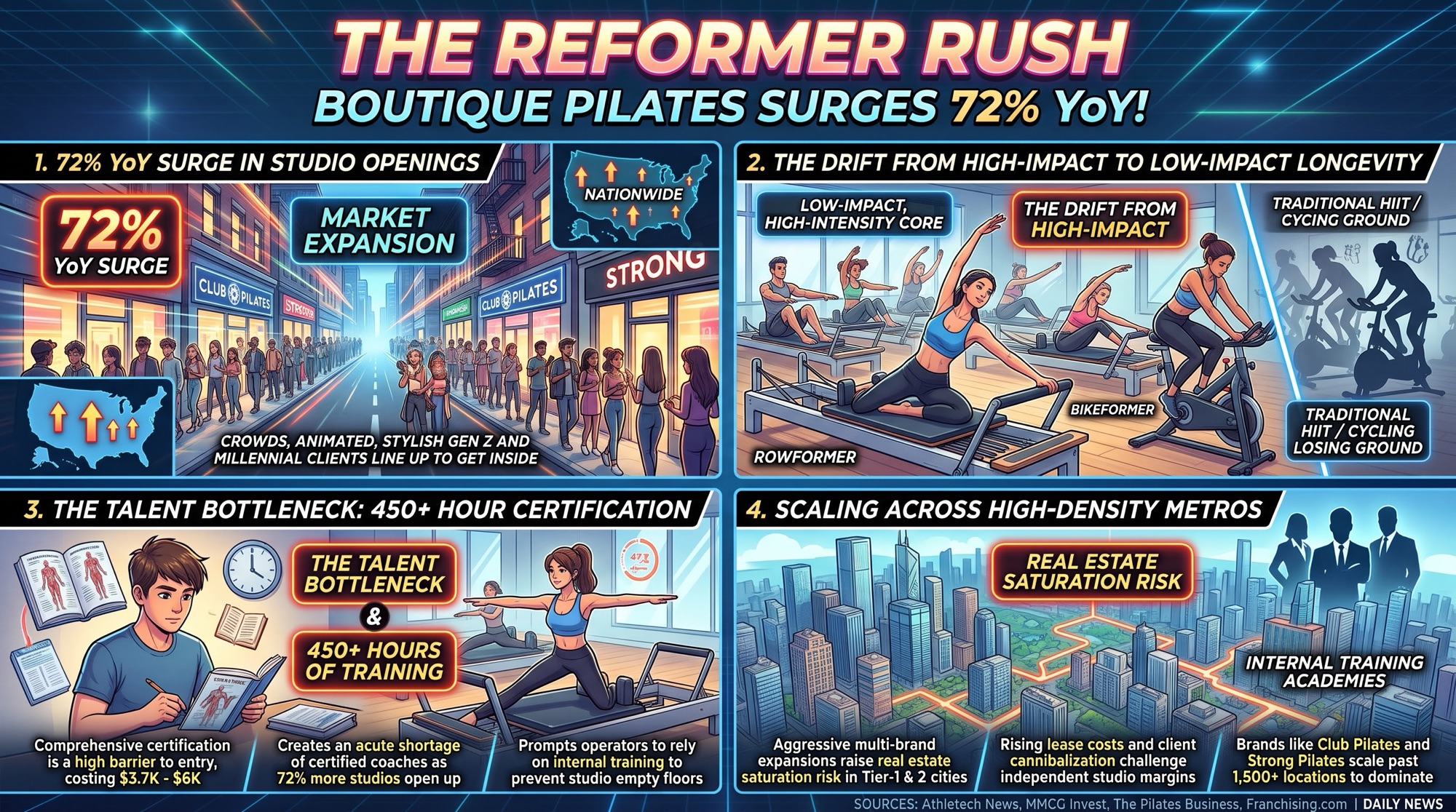
The boutique fitness landscape is experiencing an unprecedented structural shift, driven by explosive consumer demand for reformer Pilates. Newly released industry data highlights a massive 72% year-over-year surge in boutique Pilates studio openings nationwide, marking it as the fastest-growing category in the boutique sector.

This rapid expansion is led by both scaled global franchisors and independent operators. Xponential Fitness’ Club Pilates recently surpassed a major milestone of 1,500 open studios globally, while Strong Pilates continues its aggressive international rollout. This wave of openings is actively taking market share from traditional high-intensity interval training (HIIT), indoor cycling, and boot camp concepts that dominated the previous decade.
The Drivers of the Pilates Surge
According to market analyses by MMCG Invest, the influx of growth capital into reformer-based concepts reflects a generational preference for low-impact, high-intensity core and muscular endurance training. Key demand drivers include:
- Aging and Joint-Friendly Biometrics: The expanding demographic of participants aged 55 and over increasingly favors low-impact resistance training over high-load free weights or running, often guided by orthopedic and physical therapy referrals.
- Gen Z & Millennial Social Conversion: Digital and social trends have transformed Pilates into an aspirational lifestyle category, bringing younger cohorts into boutique studios who previously viewed the modality as inaccessible.
- Complementary Longevity Trends: Consumers are shifting away from high-impact, exhaustive training in favor of sustainable, posture-correcting, and recovery-focused practices, which has elevated reformer classes to the most-booked workouts on digital fitness platforms like ClassPass for multiple consecutive years.
Market Impact and Imbalances
Despite soaring demand, a 72% unit expansion within a 12-month period introduces major operational and financial headwinds for the industry:
- Real Estate Saturation: Rapid, multi-brand expansion raises near-term saturation risks in Tier-1 and Tier-2 metropolitan markets. With multiple brands and independent studios competing for the same affluent suburban and urban commercial footprints, operators face rising lease costs and the risk of cannibalizing local client bases.
- The Talent Bottlebeck: Pilates instruction has a high barrier to entry compared to other group fitness modalities. Obtaining a comprehensive reformer certification typically requires 450+ hours of training and costs between $3,700 and $6,000, as noted by The Pilates Professional / Pilates Business.
- Proprietary Training Academies: To combat the severe scarcity of certified coaching talent and rising payroll costs, operators are moving away from traditional external hiring. Brands like Club Pilates and Strong Pilates are increasingly relying on their own internal training and certification programs to generate a steady pipeline of qualified instructors and safeguard studio unit economics.
Industry Sources:
- Athletech News Boutique & Industry Insights
- MMCG Invest: U.S. Reformer Pilates Market Outlook
- The Pilates Business: The Profitability Paradox in Pilates Studios
- Franchising.com: Club Pilates Expands Global Footprint Past 1,500 Studios
Leave a Reply