
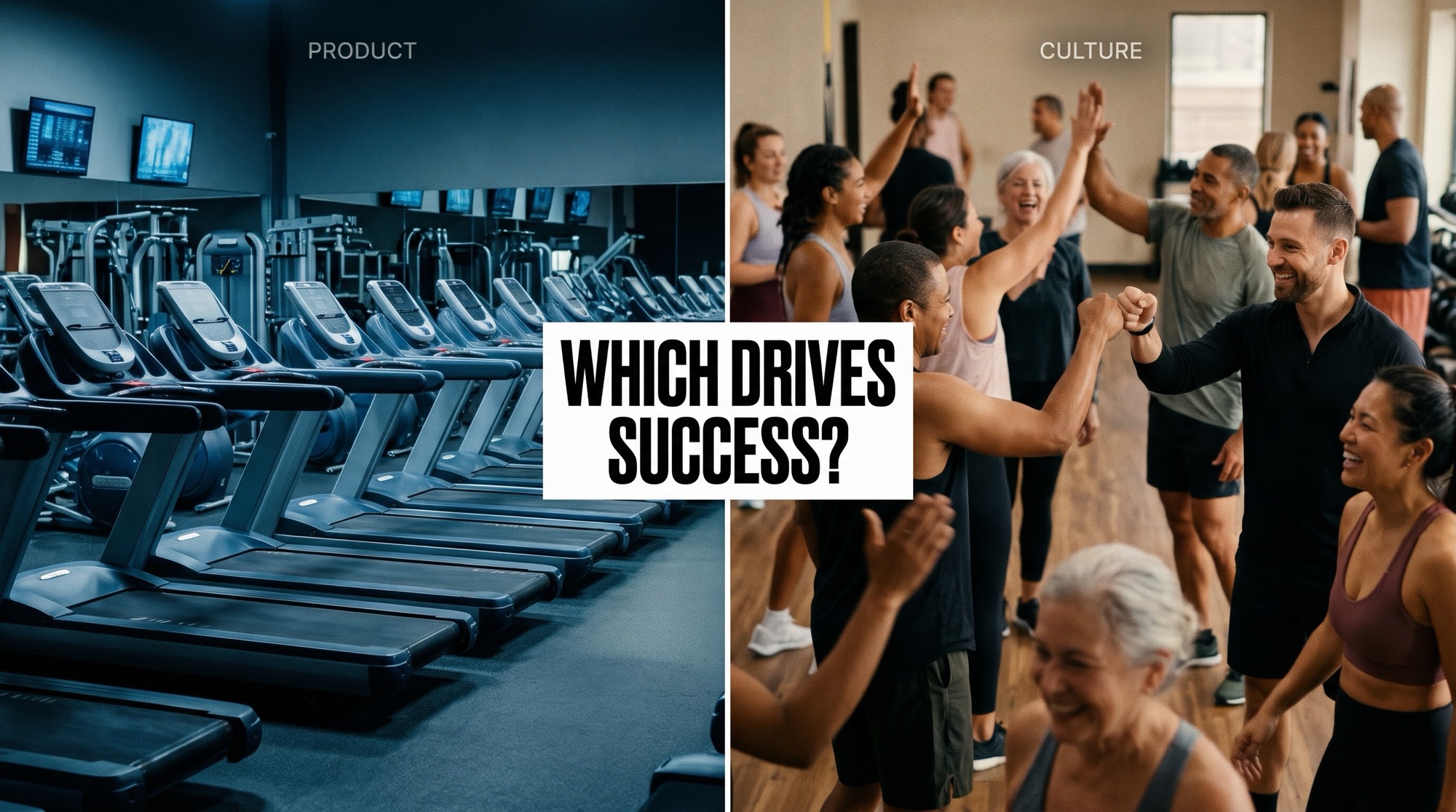
For years, fitness brands competed on product features: more squat racks, cutting-edge biometric machines, boutique studio lighting, and high-tech amenities. But as the market becomes saturated, access is no longer the differentiator—engagement and retention are.
So, what ultimately dictates long-term success: culture or product?

The Verdict: Product Wins the Sign-Up; Culture Wins the Habit
The short answer is that product is table stakes, but culture drives survival.
- The Intention-Action Gap: Most consumers know they should exercise, but intention rarely turns into lasting habit on equipment alone. When a beginner steps into a gym packed with machines, an overabundance of hardware without guidance leads to intimidation, decision fatigue, and abandonment.
- Belonging Trumps Hardware: People rarely return to places purely because of high-end machinery; they return to places where they feel seen, supported, and psychologically safe. A culture that shifts focus from intimidation and comparison to progression and community eliminates the emotional friction of showing up.
- Designing for Real Life vs. Ideal Conditions: Fragile fitness brands build experiences assuming members will always have perfect discipline and 90 minutes of free time. Resilient brands design intuitive spaces, low-friction entry points, and an encouraging culture that meets people amidst busy work, parenting, and travel schedules.
Three Core Pillars Shaping Fitness Brands
1. Lowering the Friction of the “First Workout” The pivotal moment in member retention is not the sleek tour or the digital sign-up flow—it’s the first unassisted workout. If the culture fosters intuitive floor layouts, approachable staff check-ins, and clear re-entry paths, members build early momentum instead of feeling alienated.
2. Fitness as Identity and Lifestyle Integration Modern consumers view movement not as a chore confined to an isolated 60-minute window, but as an essential part of their personal identity. Brands that succeed wrap culture around everyday life—from activewear versatile enough for casual settings to mental wellness and recovery communities.
3. Small Human Touchpoints Over Complex Tech While connected fitness and wearables enhance tracking, high retention often comes down to culture at the ground level: a trainer noticing consistent attendance, staff remembering a name, or community challenges that celebrate effort over perfection.
Sources & Further Reading
- Forbes: What Makes Fitness Brands Successful Today: Culture Or Product? by Jim Rowley (Executive Chairman, Crunch Fitness)
- Boston Consulting Group (BCG): How Activewear Brands Can Win Wellness Growth
- Morning Brew / MBI Insights: More Than Fit: How Apparel + Tech Are Fueling the New Fitness Identity
- Snap Fitness: Top Fitness Industry Trends: Inclusivity, Mental Wellness, and Culture
Leave a Reply