
From the Pool to the Stairs, Hyrox Spin-Offs Are Everywhere
They say imitation is the sincerest form of flattery. It should come as little surprise, then, that fitness brands big and small are going to great lengths to replicate the global success of Hyrox.

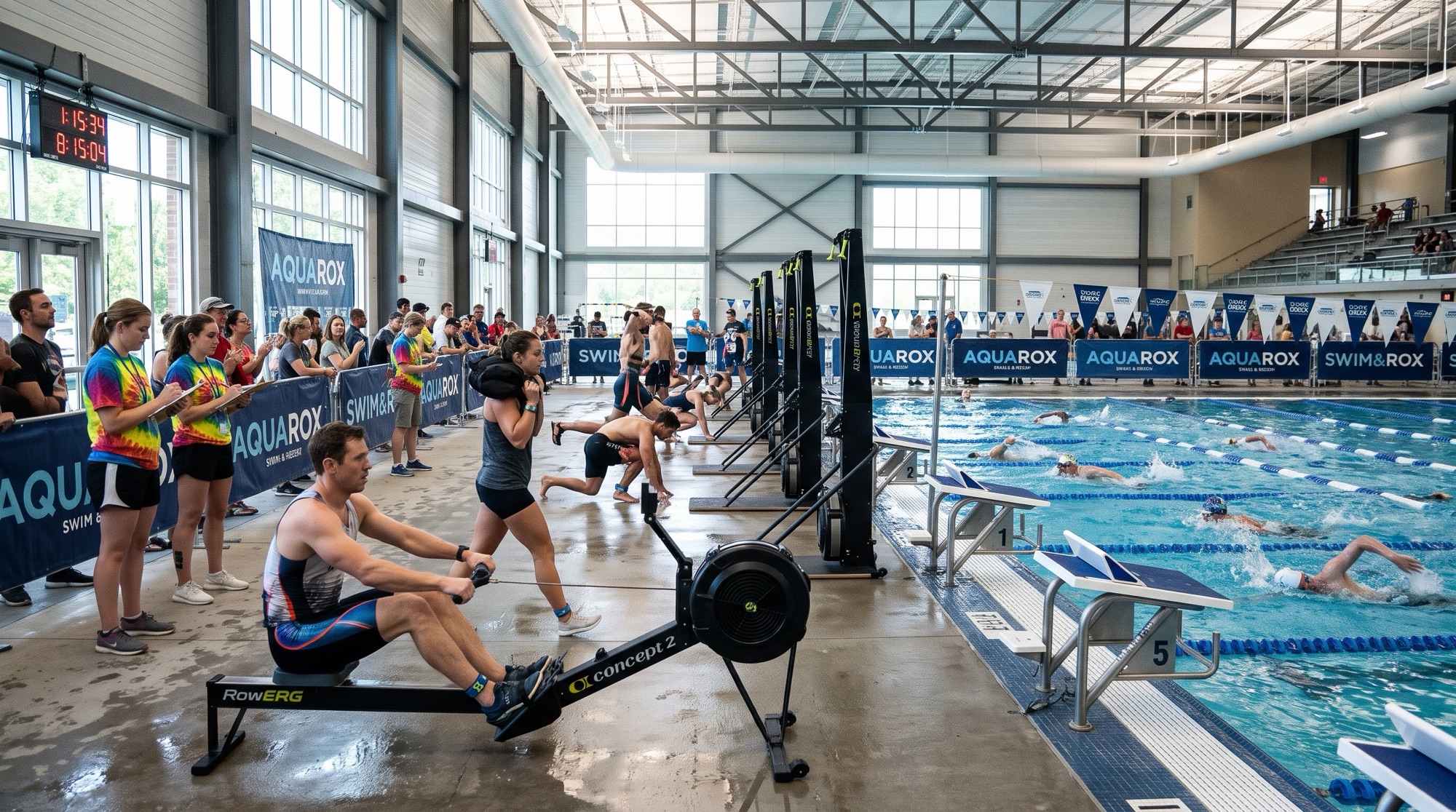
Recently, that drive has manifested in creative competition formats that swap out the traditional running segments for entirely different modalities of cardio. Over in France, organizers are staging Hyrox-style races that trade running on a track for swimming laps in a pool. Dubbed AquaRox—alongside kindred names like Swimrox and Hydrox—the phenomenon is rapidly gaining momentum.
According to data compiled by hybrid fitness platform Throwdown Live, at least 25 swimming-pool hybrid fitness races took place in France between January 2025 and September 2026 alone, with the format already spilling over borders into Belgium and the Netherlands.
What Exactly Is AquaRox?
At its core, an AquaRox race mirrors the structure of standard hybrid fitness competitions, with one major twist: every transition between functional fitness exercises happens in the water.
Instead of completing 1,000 meters of running between stations, athletes dive into the pool lanes. The most widespread standard format alternates eight functional fitness stations set up on the pool deck with 100 meters of swimming between each station:
- The Pool Deck: Competitors tackle familiar functional movements—including Concept2 Rowers, SkiErgs, wall balls, burpees, walking lunges, and kettlebell carries.
- The Water: Athletes jump back into the pool to knock out 100-meter swim intervals, though individual event distances vary from 25 m sprints up to 200 m per interval depending on the facility.
Total swimming distances typically range from 200 meters in beginner formats up to 2,000 meters in endurance categories. Because lane availability dictates logistics, races are most commonly run in pairs (doubles), with waves of three to four teams starting every five to seven minutes.
A Grassroots Boom: From Municipal Pools to Olympic Venues
The surge of pool-based hybrid racing has spread across municipal recreation departments, private fitness operators, and CrossFit affiliates:
- Elite Venues: High-profile sports complexes like the Olympic Aquatics Centre (CAO) in Saint-Denis have hosted dedicated events, offering both Classic and Elite pair and solo categories.
- Unique Settings: In Paris, athletes took to the water at the floating barge venue Annette K for the Swim’n’Rox challenge, covered by platforms like HyCoach, combining pool loops with deck ergometers and bodyweight exercises.
- Local Community Centers: Operators like Récréa and UCPA, as well as local councils across French regions—from Dijon and Cesson-Sévigné to Chaumont—have integrated AquaRox sessions and weekend throwdowns directly into their aquatic center schedules. Entry fees range from free community sessions to €110 for premium competitive team tickets.
Why the Concept Works
- Lower Joint Impact, Higher Aerobic Strain: Replacing pounding track running with swimming makes the hybrid fitness format accessible to athletes dealing with lower-body impact injuries, while simultaneously elevating the demand on lung capacity and upper-body stamina.
- The “Cold Shock” Transition: Moving immediately from a redline SkiErg or burpee set into controlled, horizontal breathing in cold water creates a unique pacing puzzle that pure runners rarely encounter.
- Underutilized Infrastructure: Public and private swimming complexes already possess extensive deck space and lane infrastructure, giving pool operators a turn-key way to tap into the functional fitness boom without building specialized arenas.
As functional fitness continues to diversify beyond traditional indoor turf tracks, AquaRox demonstrates that the Hyrox template isn’t confined to running shoes—it just needed goggles.
Leave a Reply