
The Tech on Your Wrist Won’t Save You (Unless You Actually Use It)
Every year, roundups like Men’s Health’s tested guide to the best fitness trackers highlight incredible engineering: from screen-free minimalist straps like Whoop to biometric smart rings like Oura, alongside endurance tanks from Garmin, Suunto, and Apple.
They count every heartbeat, track oxygen saturation, analyze your sleep architecture down to the minute, and spit out daily readiness scores.

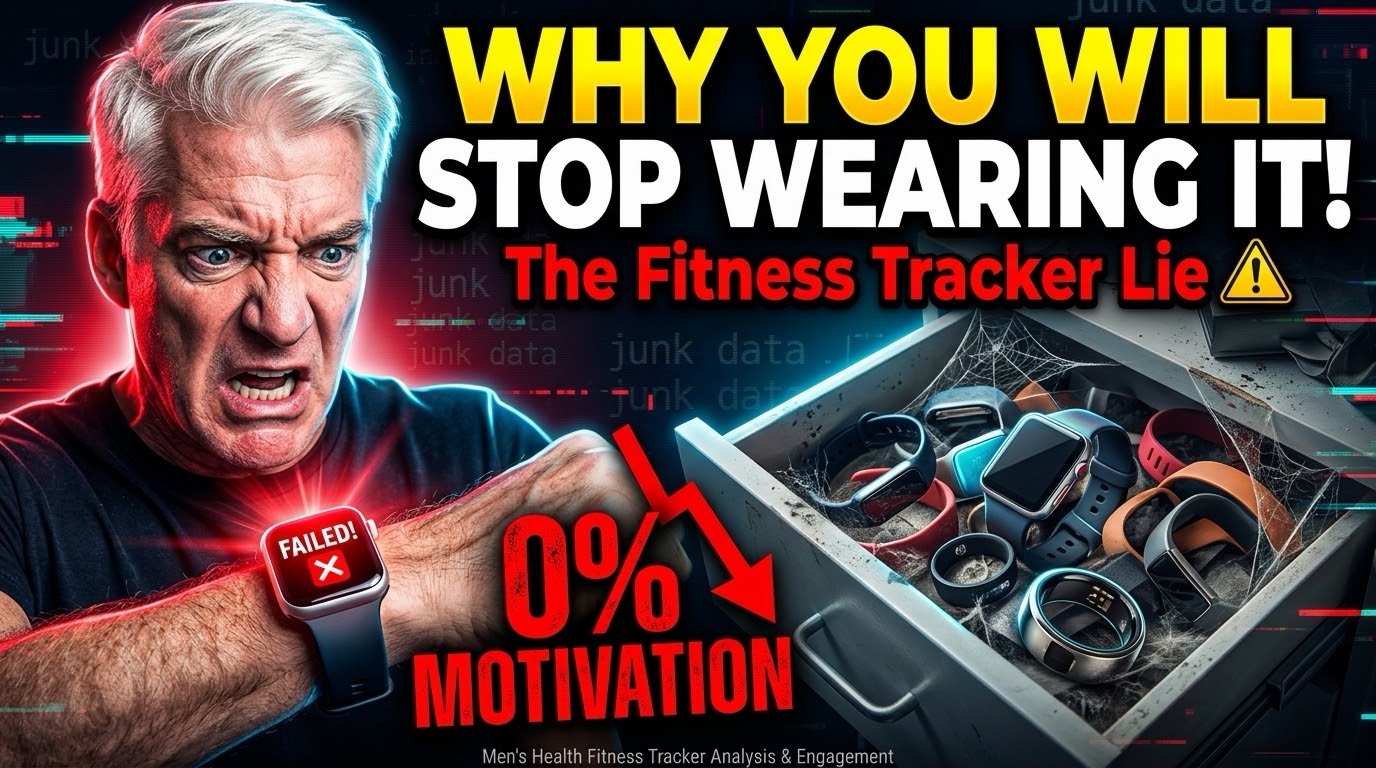
Yet, there is an uncomfortable industry reality: a massive percentage of fitness trackers end up gathering dust in a bedside drawer.
The Novelty Spike vs. “Tracker Fatigue”
When you first strap on a new wearable, it acts as an immediate psychological catalyst:
- You park further away just to close your ring or hit your 10,000 steps.
- You check your sleep stages the second you open your eyes.
- Gamified badges and streak alerts deliver quick dopamine hits that reinforce positive habits.
Then, around week three or month three, reality sets in.
Industry research and consumer behavior studies—ranging from Gartner’s wearable abandonment findings to reporting documented by PBS NewsHour and MobiHealthNews—consistently show that roughly one-third of wearable owners abandon their devices within six months.
Why? Because of tracker fatigue and data overload:
- Friction: Charging cables, skin irritation, wrist bulk, or forgetting to put it back on after a shower break the routine.
- Notification Numbness: Constant buzzes scolding you to move when you’re stuck in a 3-hour work meeting quickly become background noise.
- Passive Watching vs. Active Action: Your watch tells you your HRV dipped by 20% and your sleep was fragmented. If you don’t adjust your training load, alter your bedtime habits, or pull back your intensity, the data is meaningless. As Live Science points out in their analysis of tracker abandonment, devices don’t supply intrinsic motivation; without an actionable plan, users burn out.
The Rule: Data Without Action Is Just Digital Clutter
A $400 wearable doesn’t burn calories, rebuild muscle tissue, or restore your central nervous system. It only reflects what you do.
- If your readiness score is low: Do you actually take the rest day or throttle down your lift? Or do you ignore the warning and dig a deeper hole?
- If your resting heart rate creeps up: Do you evaluate your hydration, stress, and alcohol intake? Or do you swipe the screen away?
- If your sleep tracker flags poor REM/Deep cycles: Do you turn off the TV earlier, or do you just complain about feeling tired?
How to Make a Tracker Actually Work for You
- Pick One or Two Key Metrics: Ignore the 40+ stats you don’t need. Focus strictly on trend lines—like Resting Heart Rate (RHR) trends or 7-day sleep consistency.
- Close the Loop Daily: Before looking at your watch in the morning, ask yourself: “How do I feel on a scale of 1 to 10?” Then check the tracker. Calibrate your internal intuition against the external sensor.
- Automate the Friction Away: If you hate screens and wrist clunkiness, look at smart rings or screenless bands. If battery charging ruins your consistency, pick an endurance watch with weeks-long battery life.
The best fitness tracker isn’t the one with the flashiest AMOLED screen or the longest spec sheet; it’s the one whose data you actually respect and use to change your behavior.
Leave a Reply