
🧠 Deep Dive: What Is Pinealon (EDR Peptide)?
When it comes to recovery, high performance, and cognitive longevity, sleep and tissue repair get most of the spotlight. But in the peptide community, Pinealon (Glu-Asp-Arg / EDR) has gained significant attention for its proposed neuroprotective and cellular-level brain benefits.

What Exactly Is It?
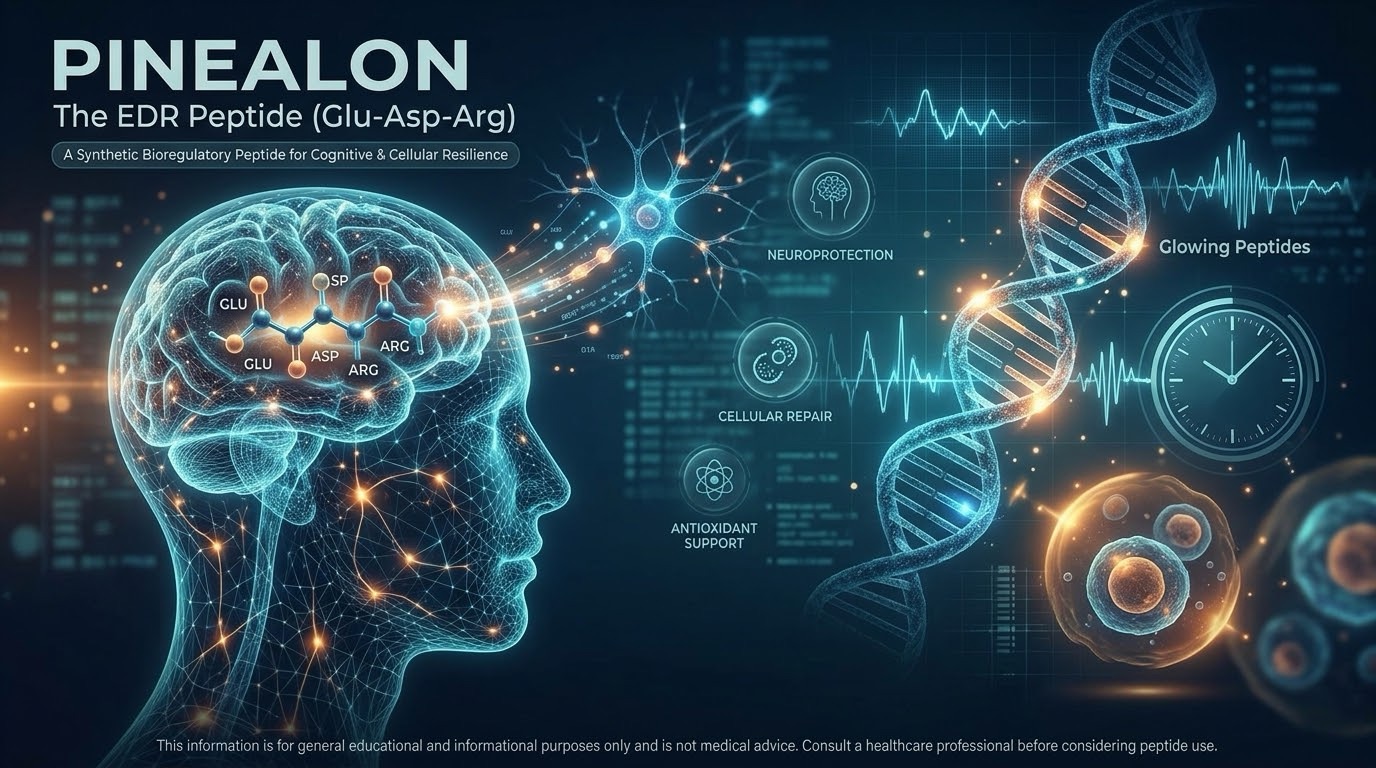
Pinealon is a synthetic, ultra-short bioregulatory peptide composed of three amino acids: Glutamic acid (Glu), Aspartic acid (Asp), and Arginine (Arg).
Originally developed through Russian peptide bioregulator research (pioneered by Dr. Vladimir Khavinson), it was created to mimic natural peptide signaling in the central nervous system, particularly targeting brain and pineal-adjacent tissue to support cellular health and adaptogenic function.
What Does the Science Say?
Unlike mainstream nootropics, Pinealon is primarily researched as an epigenetic modulator and antioxidant protector:
- Gene Expression & Neuroprotection: Research indicates that short peptides like EDR can penetrate cell membranes, enter cell nuclei, and interact with DNA strands to help modulate gene expression related to cellular repair, neuroplasticity, and inflammation.
- Protection Against Hypoxia & Oxidative Stress: Preclinical animal and cellular studies suggest Pinealon reduces reactive oxygen species (ROS) in brain tissues exposed to oxygen deprivation, potentially protecting cortical neurons from programmed cell death (apoptosis).
- Circadian & Cognitive Alignment: Anecdotally and in biohacking discussions—such as discussions around sleep optimization and neurorecovery—users look to Pinealon for mental clarity, reaction time maintenance under fatigue, and stabilizing disrupted biological rhythms.
The Reality Check & Current Status
- Limited Large-Scale Human Trials: The majority of peer-reviewed data on Pinealon stems from animal models, cell cultures, and earlier European/Russian bioregulation studies. Large, randomized, double-blind human clinical trials in the US remain limited.
- Regulatory Standing: Like many research peptides, Pinealon is not FDA-approved to diagnose, treat, cure, or prevent any medical condition.
- Purity & Sourcing: Because peptides are often sold online as “research chemicals,” dosing consistency, sterility, and peptide purity vary widely without clinical oversight.
Key Takeaway
Pinealon represents an intriguing frontier in cellular brain health and neuro-resilience—especially for athletes balancing heavy training loads, stress, and recovery. However, high-quality sleep, foundational nutrition, and targeted rest days remain your primary, proven recovery tools.
Disclaimer: This information is for general educational and informational purposes only and should not be taken as medical advice. Always consult with a qualified healthcare professional before considering the use of any peptide, supplement, or hormone therapy.
Leave a Reply