
“No Room to Take a Breath”: How the Lifeguard Shortage Is Squeezing San Francisco Masters Swimming
Across San Francisco’s municipal pools, lane space has reached a breaking point. A recent report by the San Francisco Chronicle reveals that local aquatic organizations are struggling to secure enough water time as crowded city facilities and a chronic shortage of municipal lifeguards leave clubs with virtually no room to expand.

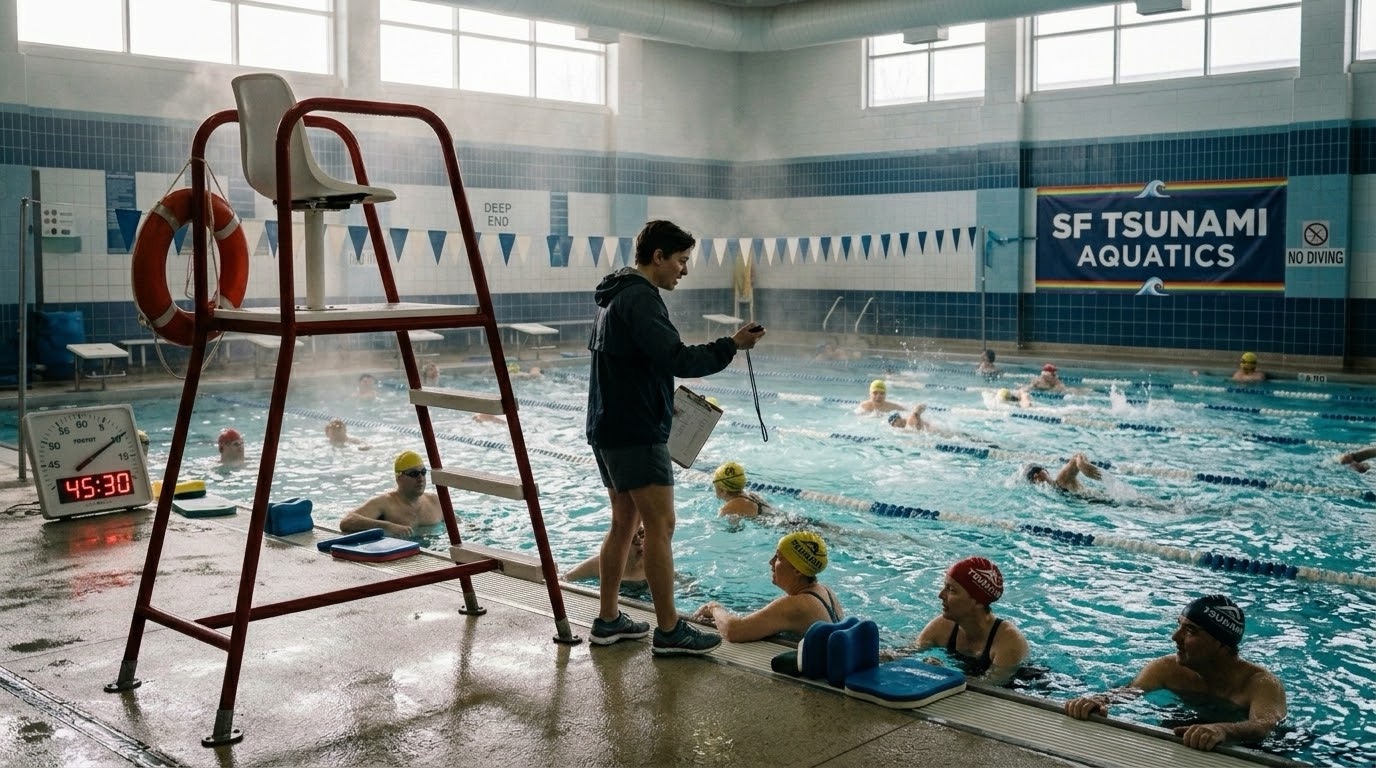
While youth swim schools and casual lap swimmers feel the pinch, the bottleneck hits adult competitive and fitness clubs particularly hard—most notably SF Tsunami Aquatics, the city’s premier LGBTQ+ and ally Masters swimming team.
The Squeeze on SF Tsunami and Masters Swimming
Founded in 1986 to prepare swimmers for Gay Games II, SF Tsunami has spent four decades building an inclusive community for fitness, competitive Masters swimming, and synchronized swimming in the Bay Area (Bay Area Reporter). Operating under the umbrella of U.S. Masters Swimming, the club relies primarily on city-owned indoor pools like Hamilton Aquatic Center in the Western Addition and Garfield Pool in the Mission.
Unlike private fitness clubs with proprietary water, Masters clubs depend on evening and weekend permit rentals from the San Francisco Recreation and Park Department. But with current staffing constraints:
- Packed Lanes: Practice sessions face strict lane caps, forcing multiple swimmers to circle-swim in congested lanes where interval pacing and stroke work become difficult.
- Capped Rosters & Waitlists: Despite steady demand from adults seeking structured conditioning and community, clubs cannot add workout times or open new lane blocks without assigned city guards on deck.
- Constrained Practice Windows: Evening training slots remain fiercely contested between adult Masters programs, youth swim teams, and open public recreational hours.
Why the Bottleneck Exists
- The Persistent Lifeguard Deficit: As highlighted by the American Lifeguard Association, municipal aquatic systems nationwide continue to face staffing shortages rooted in training backlogs, rigorous physical certification requirements, and competition from higher-paying service-sector jobs. In high-cost metro areas like San Francisco, recruiting and retaining certified guards on municipal hourly schedules remains difficult.
- Competing Public Priorities: The San Francisco Recreation and Park Department has actively adjusted schedules—such as piloting 7-day public swimming schedules by shifting pools like Garfield and Rossi to Sunday–Thursday rotations—to expand neighborhood recreational and family access. However, expanding general public hours without an influx of new staff often leaves permitted club hours at a standstill.
- Strict Deck Ratios: California safety mandates require designated lifeguard-to-swimmer ratios on deck regardless of whether the water is being used by beginners or experienced Masters athletes, preventing teams from self-guarding unless complex regulatory and liability hurdles are cleared.
Looking Ahead: Potential Solutions
Swimmers, coaches, and aquatic advocates across the Bay Area point to a few practical pathways out of the lane gridlock:
- Targeted Pipeline Partnerships: Swim clubs partnering directly with the city to sponsor lifeguard certification courses for club members, creating a dedicated pool of guards to staff early-morning and late-evening club blocks.
- Permit Flexibilities for Sanctioned Clubs: Creating clear frameworks where USMS-certified coaches with current safety and lifesaving credentials can oversee coached practices, reducing reliance on municipal guard shifts.
- Modernized Regional Infrastructure: Expanding local aquatics capacity long-term so historic programs like SF Tsunami can welcome newcomers without turning away athletes at the door.
Sources & References
- San Francisco Chronicle: No room to take a breath: S.F. swim clubs squeezed by city lifeguard shortage
- SF Tsunami Aquatics: Official Team Website & Practice Schedules & Swim Workouts Overview
- U.S. Masters Swimming (USMS): SF Tsunami Masters (TSUN) Club Profile & National Organization
- Bay Area Reporter: SF Tsunami 40-Year Anniversary & Community Retrospective
- San Francisco Recreation and Park Department: Hamilton Pool Facility Guide & Public Swimming Schedule & Aquatics FAQs
- American Lifeguard Association: National Aquatics Safety & Staffing Insights
Leave a Reply