
Apple’s New Readiness Score: The Missing Link in Mindful Wellness Planning
For years, the Apple Watch was widely celebrated for its ability to motivate people to move, stand, and close their Activity rings. However, fitness enthusiasts and recovery-focused athletes often pointed out a noticeable gap: the ecosystem pushed you to keep moving, regardless of whether your body desperately needed a rest day.

With the introduction of Apple’s Readiness Score in the dedicated Readiness app (as detailed by Men’s Health and Apple Support), Apple has bridged the gap between raw exertion and holistic wellness planning. Rather than treating fitness as an endless streak of closed rings, the watch now offers actionable context on when to push hard and when to pull back.
What Is the Readiness Score?
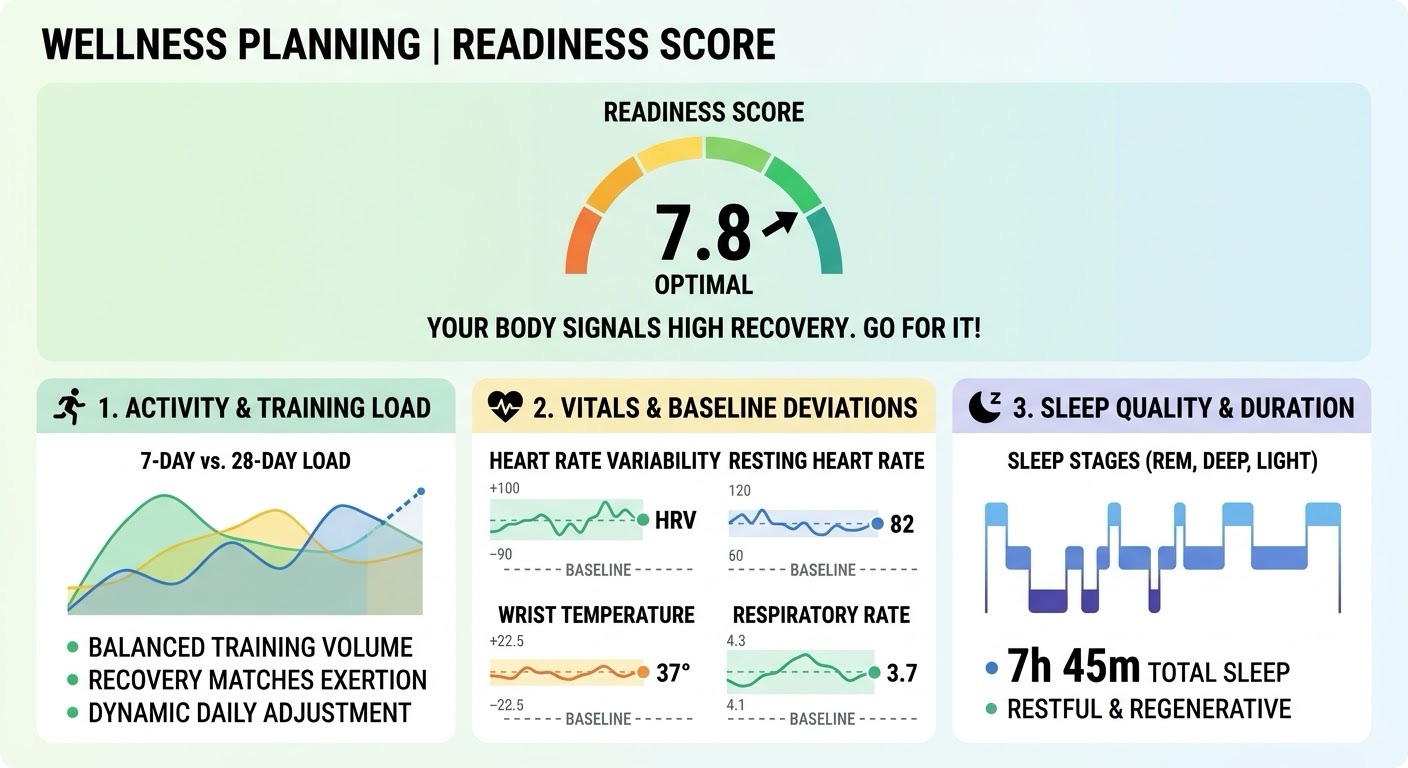
Built on an intuitive 0 to 10 scale, the Readiness Score synthesizes biometric data into four straightforward coaching zones:
- 8–10 (Go For It): Sleep, recovery metrics, and load are aligned—ideal for high-intensity intervals or personal records.
- 5–7 (Ready): Baseline status. You are primed for standard, planned training sessions.
- 2–4 (Pace Yourself): Something is straining your system (fatigue, poor sleep, or high training load). Keep sessions lighter or focus on active recovery.
- 0–1 (Recover): Multiple body signals point toward systemic strain. Prioritize rest, hydration, and restorative sleep.
The scale is intentionally conservative at the bottom: landing in the narrow “Recover” zone requires clear signals of overexertion or physiological stress, meaning when your watch tells you to stop, it is worth listening.
The Three Pillars Behind the Score
Rather than relying on isolated snapshots, the Readiness Score brings together three distinct pillars of physiological health:
- Activity & Training Load: Building on the 7-day vs. 28-day Training Load metrics introduced in watchOS, the score tracks the intensity and volume of your sessions. Unlike static morning readiness metrics, this updates dynamically—a tough workout in the afternoon will lower your remaining daily capacity.
- Vitals & Baseline Deviations: By establishing a rolling personal baseline (requiring at least 7 nights of sleep data), the algorithm checks key biometrics against your historical normal:
- Heart Rate Variability (HRV)
- Resting Heart Rate
- Wrist Temperature
- Respiratory Rate and Blood Oxygen
- Sleep Quality & Duration: Overnight sleep stages and total restorative rest factor heavily into the baseline calculation each morning.
A Gateway to Smarter Wellness Planning
Historically, fitness trackers that focused solely on strain risked nudging users into overtraining or burnout. The introduction of recovery-guided metrics changes the dynamic in three key ways:
- Shifting from “More Is Better” to “Smarter Is Better”: Success is no longer measured solely by burning the maximum number of calories. Wellness becomes a sustainable rhythm of hard efforts balanced by deliberate recovery.
- Objective Validation for Rest Days: It can be mentally tough to skip a session or reduce volume. Having biometric confirmation helps eliminate the guilt associated with dialing down workout intensity.
- Contextual Health Awareness: Because the Readiness score responds to overnight vitals and temperature shifts, sudden, unexplained drops often serve as an early heads-up that you might be fighting off an illness, experiencing high lifestyle stress, or struggling with sleep hygiene.
Where to Learn More
- Read the deep-dive analysis on the new feature at Men’s Health.
- Check the official setup guidelines and biometric requirements via the Apple Watch User Guide.
- Explore how the metric interacts with overall load and vitals on JerryCards Tech & Health Analysis.
Leave a Reply