
If it feels like your entire social media feed, neighborhood park, and friend group have suddenly laced up running shoes, you are not imagining it.

We are officially living through what race organizers and sports historians call the “Third Running Boom.” The first wave swept the globe in the 1970s and ’80s, followed by another surge around the 2008 financial crisis. Today, marathons are hitting record lottery numbers—over 1.1 million applicants vied for just 59,000 spots in the London Marathon—and fitness brands like Peloton are pivoting aggressively into commercial treadmills to catch up with the momentum.
Here is a breakdown of why everyone is hitting the pavement all of a sudden.
1. Run Clubs Have Replaced Dating Apps and Nightclubs
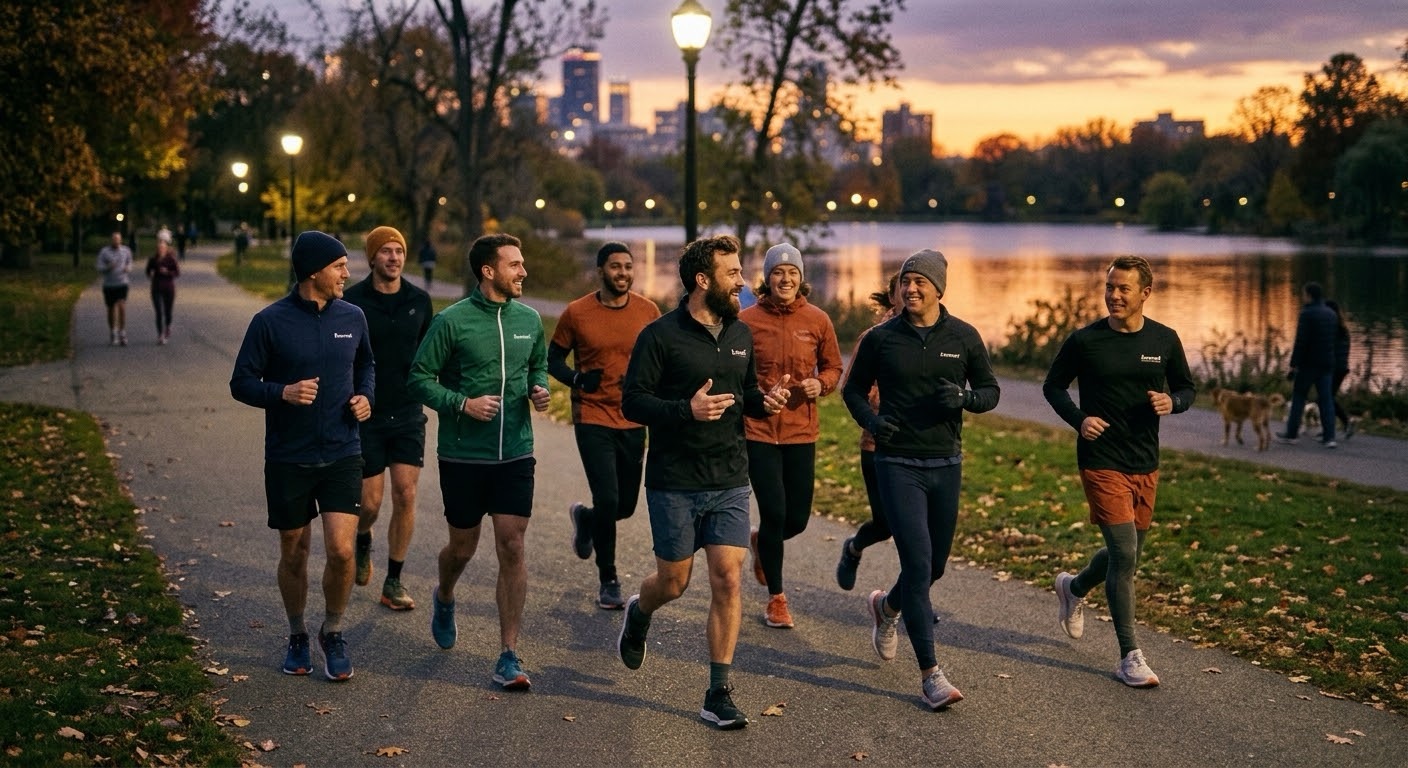
Exhaustion with swipe culture and screen-first interactions has pushed younger generations back into the physical world. As reported by Marketplace, local running clubs are exploding across both major metropolitan hubs and small rural towns, functioning as modern social mixers.
According to coverage from VICE and The Guardian, running clubs offer low-pressure, organic settings to meet friends or romantic partners. Running side-by-side removes the awkwardness of formal first dates, filters for shared interests, and usually ends with a casual coffee or post-run drink.
2. A Concrete Anchor in Unstable Times
Historically, running booms coincide with broader economic and cultural turbulence. As sports writer Lee Glandorf explained to Marketplace, “Running does boom in periods of instability… You see marked improvement day in day out if you commit to a running practice, and there’s not many things you can say in this world that do that.”
When the macro environment feels unpredictable, tracking measurable personal progress—a slightly faster split, an extra mile completed—offers a tangible sense of control and mental clarity.
3. The Shift from Sweat-Stained Gym Gear to Sleek Streetwear
Running has undergone a major aesthetic overhaul. The sport is no longer defined solely by neon short-shorts and basic polyester singlets.
Independent boutique running brands, chunky maximalist footwear (like Hoka and On Running), wraparound performance eyewear, and muted monochrome palettes have transformed running into an extension of everyday street style. Looking good while exercising makes showing up to weekly meetups feel like a lifestyle choice rather than a chore.
4. Low Barrier to Entry Meets High Gamification
Unlike boutique gym memberships that can cost hundreds of dollars a month, outdoor running requires minimal initial investment: a pair of decent shoes and an open door.
At the same time, platforms like Strava have turned running into a collaborative, gamified experience. Strava’s Year in Sport trends highlight how athletes increasingly turn to communal fitness and group milestones over isolated grind sessions, reinforcing the habit through digital “kudos” and mutual accountability.
Whether it is chasing endorphins, dodging burnt-out dating algorithms, or simply wanting an excuse to grab coffee with neighbors on a Saturday morning, running has shifted from a solitary chore to community-driven lifestyle.
Leave a Reply