
Can Mental Resilience Help You Live Longer? New Study Finds a Powerful Link
We often think of longevity in purely physical terms: eating a balanced diet, exercising regularly, managing blood pressure, and avoiding smoking. However, growing scientific evidence suggests that your mindset and coping mechanisms play an equally crucial role in how long you live.

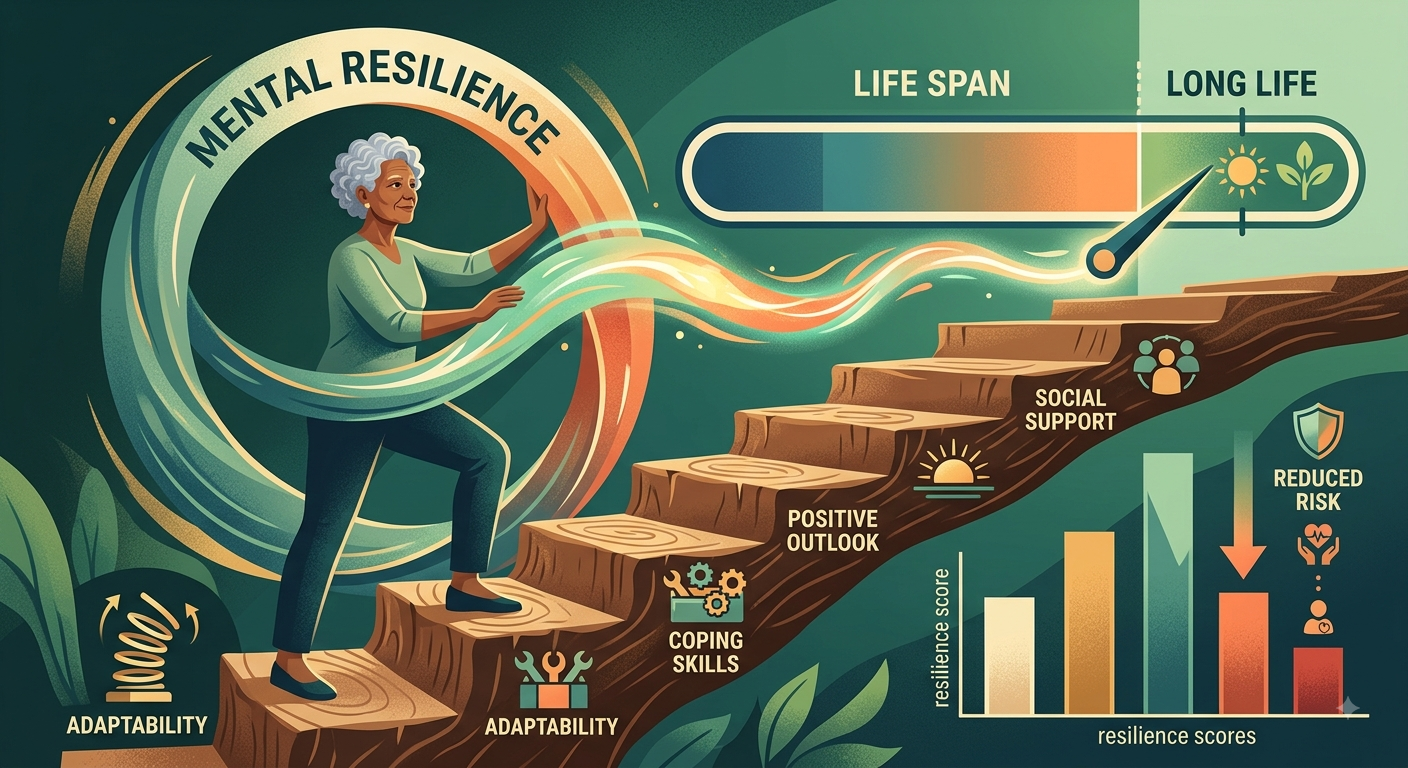
A study published in BMJ Mental Health reveals a striking connection between psychological resilience—the ability to adapt to adversity, stress, and life changes—and a significantly lower risk of death in older adults.
What Did the Study Look Like?
Researchers from Sun Yat-sen University and the Karolinska Institutet analyzed data from the Health and Retirement Study (HRS), a nationally representative cohort in the United States.
- Participants: 10,569 adults aged 50 and older (baseline data collected between 2006 and 2008).
- Follow-up Period: Tracked through May 2021 (over a decade of follow-up).
- Outcomes Tracked: 3,489 all-cause deaths recorded during the observation period.
Psychological resilience was assessed using validated psychological scales, and the researchers tracked how resilience scores correlated with survival over time.
Key Findings: A Near-Linear Protective Effect
The findings demonstrated a consistent, dose-dependent relationship: the higher an individual’s psychological resilience, the lower their risk of mortality.
- Baseline Protection: Adjusting for age, sex, race, and BMI, every standard deviation increase in resilience was linked to a 25% reduction in mortality risk (\text{HR} = 0.750).
- Independent of Chronic Illness: Even after adjusting for existing chronic conditions—including heart disease, stroke, hypertension, diabetes, and cancer—the protective benefit remained strong, showing an approximate 21% reduction in mortality risk (\text{HR} = 0.786).
- Beyond Lifestyle Factors: After accounting for smoking status and other health-related behaviors, higher resilience still provided a ~19% lower mortality risk (\text{HR} = 0.813).
Why Does Resilience Affect Physical Longevity?
While the study is observational, researchers point to several biological and behavioral pathways that explain this link:
- Lower Chronic Stress & Inflammation: Chronic psychological stress triggers systemic inflammation and elevates cortisol levels, accelerating cardiovascular and metabolic decline. Resilient individuals recover faster from acute stressors, protecting the cardiovascular and immune systems.
- Proactive Health Behaviors: Resilient adults tend to adhere better to medical treatments, maintain social connections, and adopt proactive coping strategies rather than turning to maladaptive behaviors (like substance use or physical inactivity).
- Cognitive and Emotional Buffering: Finding purpose and maintaining emotional regulation helps mitigate the depressive symptoms and loneliness often associated with aging.
Key Takeaway
Psychological resilience is not merely a fixed personality trait—it is an adaptable mental skill. Integrating resilience-building practices, cognitive-behavioral tools, mindfulness, and strong social networks into public health strategies could play a meaningful role in promoting healthy aging and extended lifespan.
Source & References
- Primary PubMed Record: Association between psychological resilience and all-cause mortality in the Health and Retirement Study (PubMed PMID: 39227169)
- Journal Full Text: BMJ Mental Health (DOI: 10.1136/bmjment-2024-301064)
- Open Access Archive: PubMed Central (PMC11409260)
Leave a Reply