
The Hidden Force That Can Turn Good Athletes Into World-Record Breaking Elites
For decades, sports science focused almost exclusively on physical load: more volume, heavier lifts, and harder intervals. However, elite performance is increasingly driven by nervous system regulation to manage high-pressure situations, rather than merely increasing physical exertion. Optimizing circadian rhythms and mental composure is the true differentiator turning podium contenders into world-record breakers.

1. Nervous System Regulation: The Bridge Between Pressure and Precision
When competing on the world stage, brute force reaches a point of diminishing returns. Athletic mastery depends on the balance between the sympathetic (“fight-or-flight”) and parasympathetic (“rest-and-digest”) branches of the autonomic nervous system.
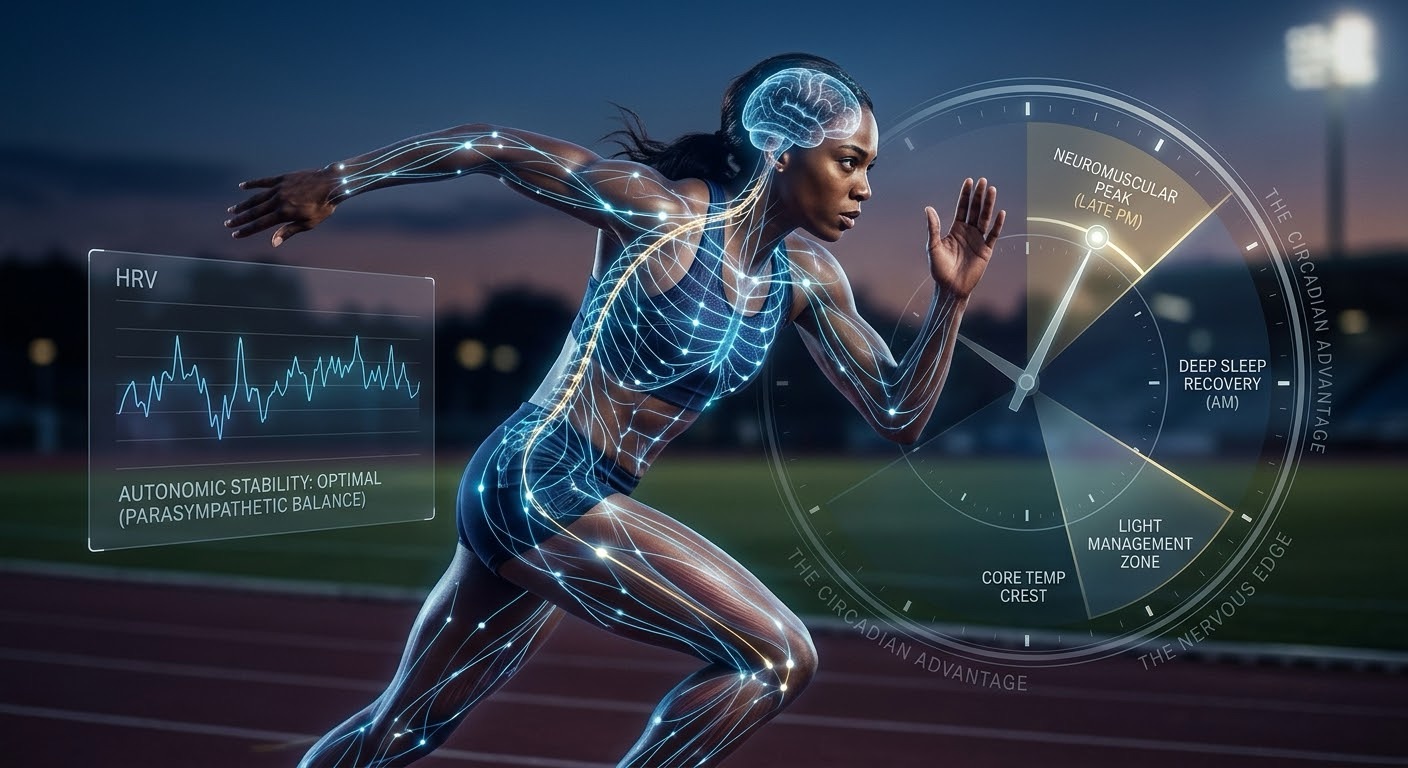
- Autonomic Balance via HRV: Heart Rate Variability (HRV) serves as a real-time window into autonomic readiness. Athletes with greater vagal tone can rapidly down-regulate stress responses, preserving fine motor control and energy efficiency under competitive strain.
- Mental Composure Under High Stakes: Neurological composure prevents cognitive tunneling and panic-induced muscle tightness, allowing athletes to execute complex motor skills effortlessly during clutch moments.
2. Circadian Rhythms: Timing the Peak Window
Even a fraction of a percent difference in output determines Olympic gold. Biological processes—from core body temperature to hormone secretion and neuromuscular recruitment—fluctuate along a 24-hour internal rhythm governed by the brain’s suprachiasmatic nucleus (SCN).
- Core Temperature & Neuromuscular Drive: Physical strength, muscle flexibility, and reaction times naturally peak in the late afternoon, coinciding with the daily crest in core body temperature.
- Light as the Master Clock Controller: As highlighted by circadian technology leaders like Mickey Beyer-Clausen in Men’s Health, targeted light exposure is the primary lever to align internal biological clocks with competitive event schedules. Strategic light timing eliminates jet lag and shifts peak performance windows to match early morning heats or late-night finals.
3. The Record-Breaking Synergy Performance DimensionTraditional FocusThe Biological / Neural Edge Pacing & PowerGrinding through fatigueRegulating sympathetic arousal to conserve glycogen RecoveryPassive resting / blind volumeCircadian-aligned sleep cycles and parasympathetic reactivation Travel & LogisticsCaffeine and sheer willpowerPrecision chronotherapy and light management protocols Clutch ExecutionHigh arousal / adrenaline spikesMeasured autonomic stability and controlled heart rate reactivity
Sources & Further Reading
- Men’s Health: Mickey Beyer-Clausen on Mastering Circadian Rhythm – How light exposure and internal timing dictate elite performance.
- National Institutes of Health (PMC): The Role of Circadian Rhythm on Sports Performance – Mechanisms linking biological clocks, core body temperature, and physical capacity.
- Frontiers in Physiology: Autonomic Nervous System Function & Exercise Physiology – Evaluating HRV and autonomic balance in athletic adaptation.
- Center for Environmental Therapeutics: Optimizing Physical Performance – Phase-shifting internal clocks for competition schedules.
Leave a Reply