
Oura Faces Class-Action Lawsuit Over Sleep-Tracking Accuracy Claims
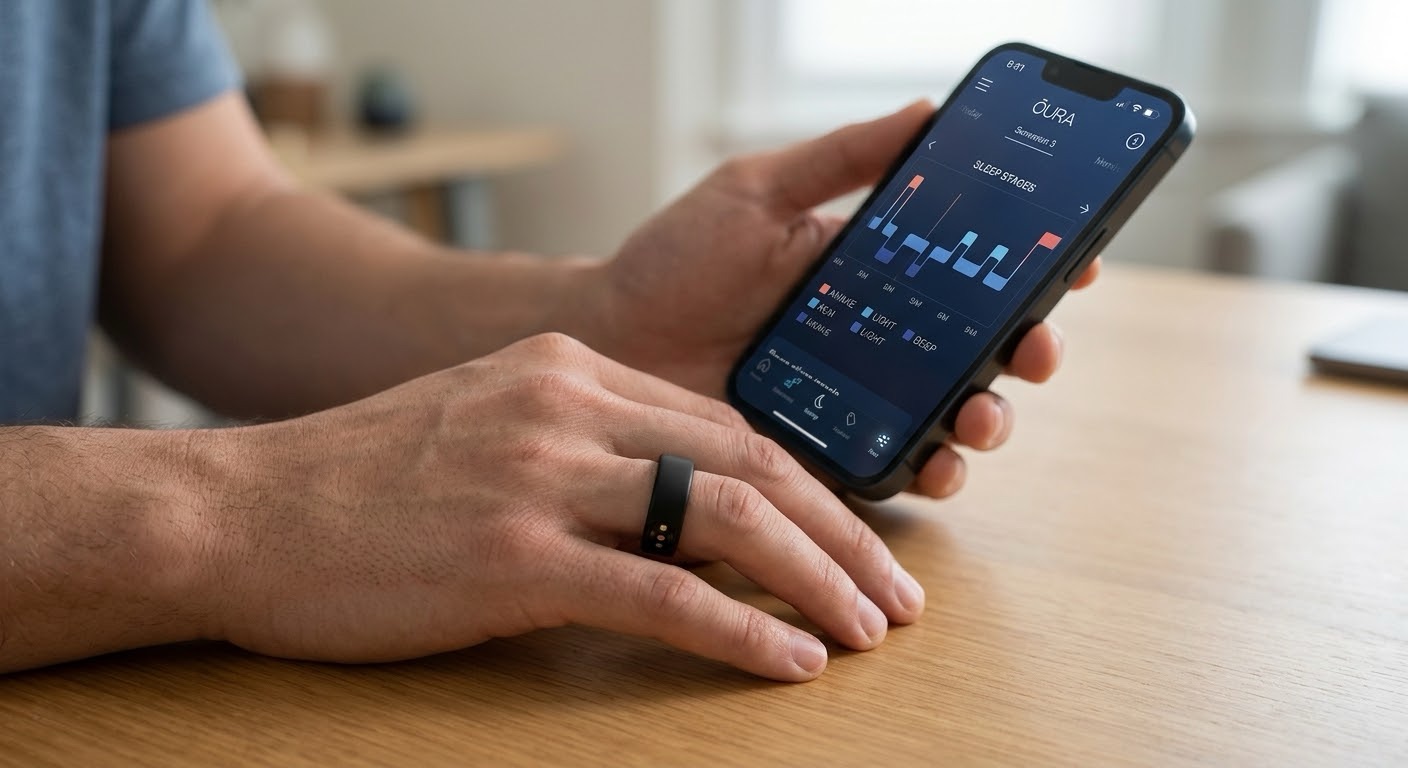
A proposed class-action lawsuit filed against Oura Health targets the core marketing of the popular smart ring: its ability to accurately track and stage human sleep.
The lawsuit, filed by the Clarkson Law Firm in San Francisco, accuses Oura of deceptive marketing practices, arguing that the company misleads consumers by promising clinical-grade accuracy from a device worn on a finger.

The Core Allegations
- “Sleep happens in the brain, not on a finger”: The lawsuit argues that true clinical sleep staging (identifying light, deep, and REM sleep) requires Polysomnography (PSG)—a clinical standard utilizing scalp electrodes (EEG) to read brainwaves and ocular sensors to track eye movements.
- Proxy Signals vs. Direct Measurement: The complaint asserts that Oura relies on biometric proxies—such as photoplethysmography (PPG) for heart rate/HRV, skin temperature variations, blood oxygen, and accelerometer motion data—paired with AI models to infer rather than measure sleep architecture.
- The Accuracy Gap: While Oura has marketed up to 95% accuracy in tracking sleep metrics against laboratory baselines, the lawsuit cites independent scientific evaluations—including a 2025 study in Nature—reporting that wearable sleep stage identification accuracy can drop to roughly 53% when categorizing specific sleep stages.
- Relief Sought: The plaintiffs seek class-action certification, restitution/refunds for affected buyers, and a court injunction prohibiting misleading accuracy claims.
Oura’s Defense
In response, Oura strongly refutes the allegations and intends to vigorously defend its technology:
- Physiological Foundation: Oura argues that sleep staging does not rely solely on direct EEG signals; systemic autonomic nervous system shifts (heart rate deceleration, HRV surges, body temperature nadirs) provide robust physiological markers of sleep stages.
- Third-Party Validation: The company emphasizes that its proprietary sleep-staging algorithms are trained on extensive datasets and repeatedly validated against clinical polysomnography in peer-reviewed sleep research literature.
The Broader Consumer Wearable Debate
This lawsuit reflects growing scrutiny over the marketing of commercial health wearables. While smart rings, bands, and watches excel at tracking sleep duration, resting heart rate trends, and overall recovery patterns, mapping exact sleep stages without direct neurophysiological sensors remains a challenge across the entire consumer health tech industry.
Here are the source links referenced:
- USA Today Report on the Lawsuit: USA Today: Oura Ring Sleep Lawsuit
- Oura’s Science & Validation Overview: Oura Blog: How Oura Measures Sleep and Validates Accuracy
Leave a Reply