
For men over 50, breaking a strength plateau rarely comes down to adding more weight or grinding through excessive reps. It comes down to training intent, neuromuscular drive, and quantified feedback.
As age-related muscle and power loss (sarcopenia) accelerates, the limiting factor isn’t always raw brute force—it’s how fast and efficiently the nervous system recruits muscle fibers. When you train without measuring velocity or bar speed, junk volume creeps in, recovery slows down, and plateaus form.

Why Velocity-Based Training (VBT) Is the Plateau-Breaker for 50+
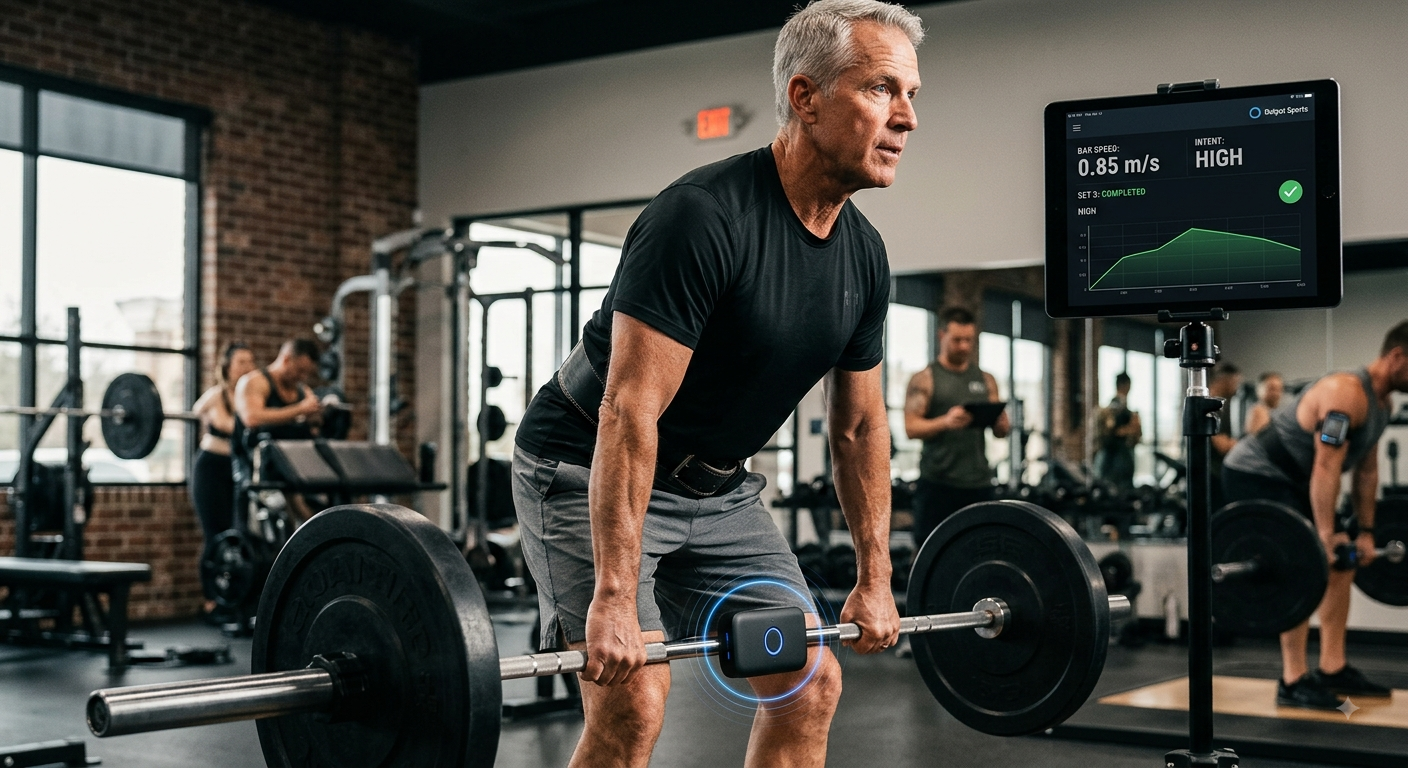
- Managing Fatigue & Protecting Joints: Instead of training to failure, tracking movement velocity tells you the exact millisecond your power drops off, signaling when to end a set before fatigue degrades technique.
- Auto-Regulation Over Fixed Percentages: Sleep, recovery, and daily joint readiness fluctuate. A sensor-backed approach adjusts the load based on real-time explosive output rather than an arbitrary percentage of a 1-rep max.
- Preserving Fast-Twitch Muscle Fibers: Power and barbell speed decline roughly twice as fast as static strength after 50. Tracking velocity ensures every rep is executed with maximal explosive intent.
The Shift to Quantified Strength on the Gym Floor
Elite sports science is moving rapidly from pro locker rooms into commercial and private training facilities.
According to coverage from Fitt Insider and Wellnation, sports-science technology company Output Sports has partnered with Brand Chatter to roll its sensor-based performance tracking tech directly into health clubs, boutique studios, and personal training facilities.
The move reflects surging demand from everyday lifters and master athletes who want objective, metric-driven tracking for strength, power, and movement quality rather than relying on guesswork.
3 Steps to Start Training with Intent
- Focus on Bar Speed: Aim to move sub-maximal loads (60–75% 1RM) as explosively as possible on the concentric phase.
- Cut Sets at a 15–20% Velocity Loss: Once bar speed dips noticeably, terminate the set to bank strength adaptations without torching your central nervous system.
- Track Trends, Not Just Load: Use sensor metrics (or dedicated VBT tools) to monitor rate of force development and power output across multi-week training blocks.
Leave a Reply