
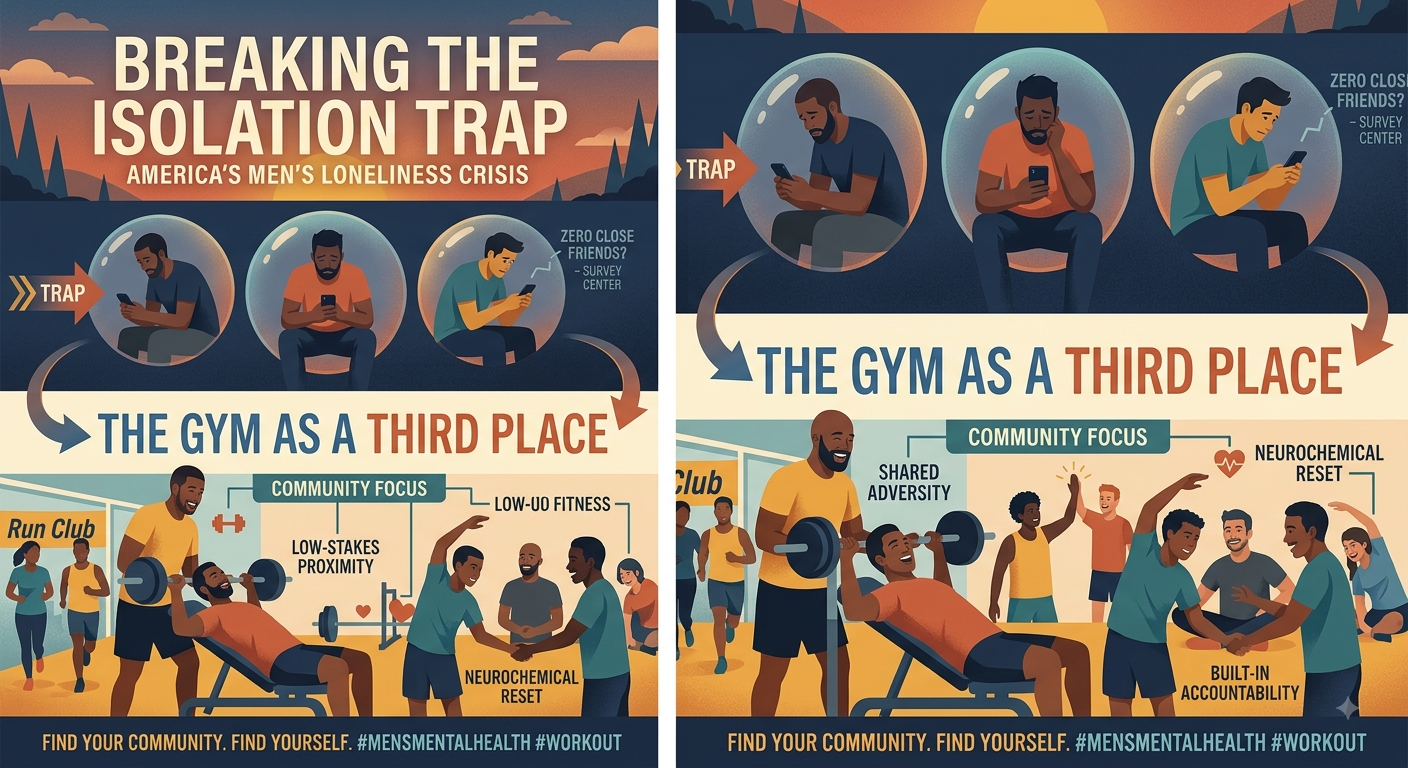
America is facing a quiet public health crisis: a dramatic collapse in male social connection. Data from the Survey Center on American Life reveals a fivefold increase in the percentage of men reporting they have zero close friends—jumping from 3% in 1990 to 15% today.

The U.S. Surgeon General’s Advisory on Loneliness warns that prolonged social isolation carries a mortality impact equivalent to smoking up to 15 cigarettes a day. For men, this “loneliness trap” often stems from a lack of “third places”—spaces outside of work and home where organic, low-pressure interaction happens.
Why the Gym Breaks the Isolation Cycle
Men often bond best through shoulder-to-shoulder connection—shared activities and common struggles—rather than face-to-face emotional check-ins. A fitness environment naturally rebuilds that social infrastructure:
- Low-Stakes Proximity: Regular attendance exposes you to familiar faces at consistent times. Sociologists refer to this as the “mere exposure effect”—repeated, informal run-ins (asking for a spot, sharing equipment, nodding across the rack) gradually build trust without the pressure of forced conversation.
- Shared Adversity: Group formats like CrossFit boxes, powerlifting clubs, run clubs, and Brazilian Jiu-Jitsu dojos create instant camaraderie. Grinding through tough sets together builds organic mutual respect and shared identity.
- Neurochemical Reset: Resistance training and aerobic exercise stimulate dopamine and endorphin release, directly counteracting the lethargy and social withdrawal associated with chronic isolation.
- Built-in Accountability: Joining a regular class, finding a training partner, or having a gym acquaintance ask “Where were you Tuesday?” creates a sense of belonging and community responsibility.
How to Turn the Gym into a Social Hub
- Pick a Consistent Time Window: Showing up at the exact same hour 3–4 days a week ensures you overlap with the same community regulars.
- Ditch the Noise-Canceling Cocoon: Keep the headphones off during warm-ups or between sets in open spaces to invite casual interaction.
- Transition to Community-Based Training: If solo lifting feels isolating, shift toward group fitness, combat sports, or local running/lifting clubs where partner drills and teamwork are built into the workout.
Leave a Reply