
From Step Counters to Clinical Diagnostics: The Wearables Arms Race
The wearable fitness tracker market has evolved far beyond counting 10,000 steps a day. As highlighted in The New York Times DealBook, what began as a lifestyle gadget category has accelerated into a multi-billion-dollar battleground for preventative medicine, biometric monitoring, and personalized digital health coaching.

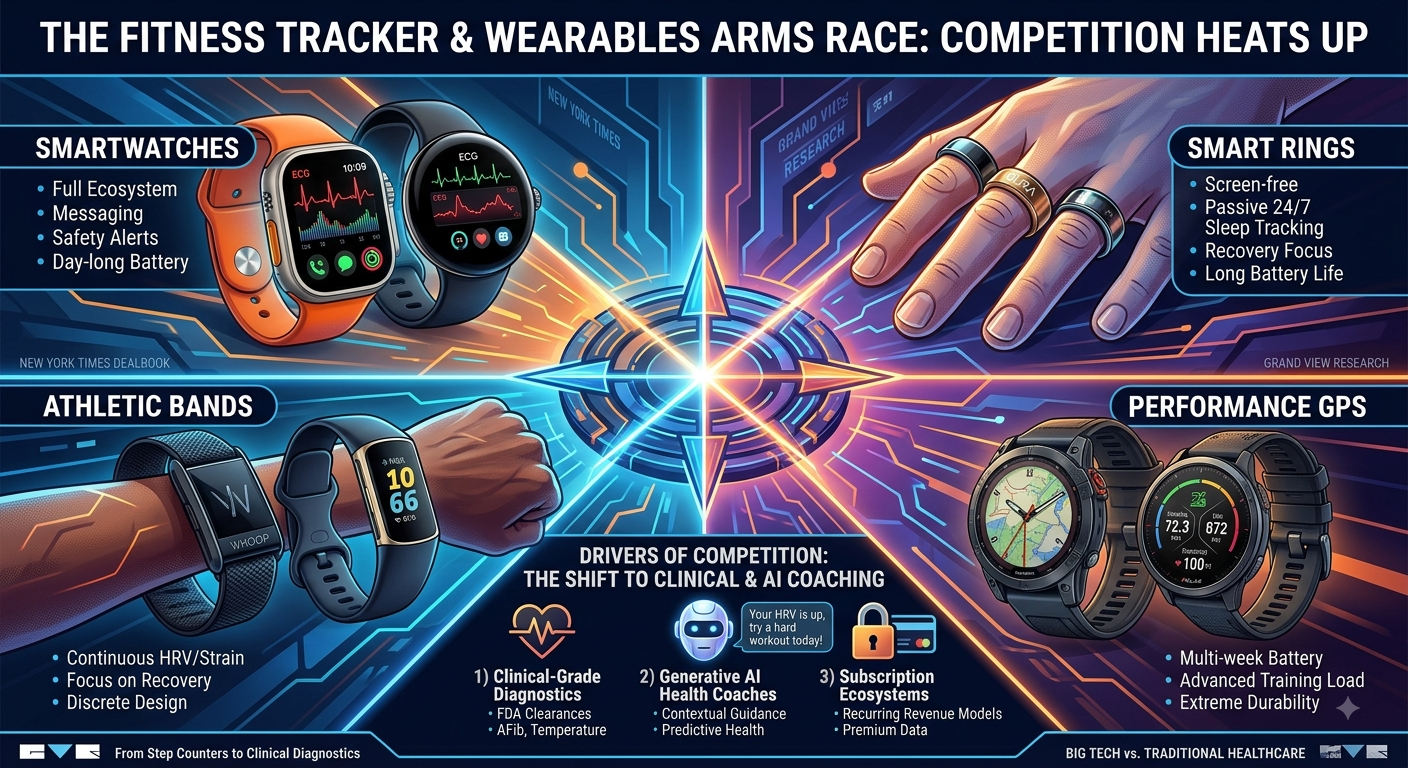
1. The Shift to Clinical-Grade Health Monitoring
The line between consumer wellness trackers and regulated medical hardware is disappearing. According to industry analysis from Grand View Research, consumer demand for continuous, medical-grade diagnostics is driving double-digit market expansion.
Key areas of biometric competition include:
- Cardiovascular Health: Continuous ECG, pulse wave analysis for arterial stiffness, and irregular heart rhythm (AFib) detection.
- Metabolic and Recovery Biomarkers: Continuous skin temperature shifts, heart rate variability (HRV), and deeper integrations with non-invasive glucose monitoring research.
- Sleep Architecture & Longevity: Comprehensive sleep staging and autonomic nervous system tracking designed to support long-term metabolic health and lifespan interventions, as detailed by LifespanMD.
2. The Form Factor Wars: Rings, Bands, and Watches
Competition has expanded across multiple form factors, moving beyond standard smartwatches: CategoryKey PlayersPrimary Value Proposition All-in-One SmartwatchesApple, Samsung, Google Pixel WatchFull ecosystem integration, on-wrist communication, emergency safety alerts, and comprehensive daily fitness tracking. Smart RingsOura Ring, Samsung Galaxy Ring, UltrahumanScreen-free, lightweight design built for 24/7 passive sleep tracking, temperature sensing, and recovery metrics. Athletic & Recovery BandsWHOOPScreenless, high-frequency physiological strain and recovery tracking designed for continuous athletic wear. Endurance & Performance GPSGarmin, Polar, CorosMulti-week battery life, rugged durability, and granular training load analytics for outdoor and endurance athletes.
As detailed in product testing from Forbes Vetted and Fitness First, the rivalry between wrist wearables and smart rings has created intense pressure on hardware miniaturization and subscription pricing models.
3. Generative AI and the Rise of the Digital Health Coach
Hardware alone is no longer enough to win market share. Brands are now competing on their software and intelligence layers:
- Contextual Health Guidance: Rather than delivering raw data (such as HRV scores or sleep stage durations), apps use generative AI to synthesize sleep, strain, and lifestyle habits into conversational, actionable guidance.
- Predictive Diagnostics: Early anomaly detection flags potential illness, overtraining, or chronic fatigue days before symptoms appear.
- Subscription Ecosystems: Companies are bundling continuous analytics into recurring models (e.g., WHOOP, Fitbit Premium, Oura), making software retention the core revenue engine.
4. What’s at Stake: Big Tech vs. Traditional Healthcare
Market research from Mordor Intelligence indicates that the ultimate prize goes beyond direct-to-consumer device sales:
- Healthcare Provider & Insurer Integration: Insurers and health systems are adopting wearable telemetry into preventative care plans, offering premium discounts and subsidies for consistent health engagement.
- Data Privacy and Medical Boundaries: The rapid accumulation of continuous physiological data brings heightened scrutiny regarding HIPAA compliance, user data ownership, and regulatory approval for medical claims.
The Bottom Line
The wearables industry is transitioning from passive logging to proactive intervention. As form factors diversify and AI-driven coaching becomes standard, the market leaders will be the companies that combine clinical-grade sensor accuracy with seamless, actionable health insights.
Leave a Reply