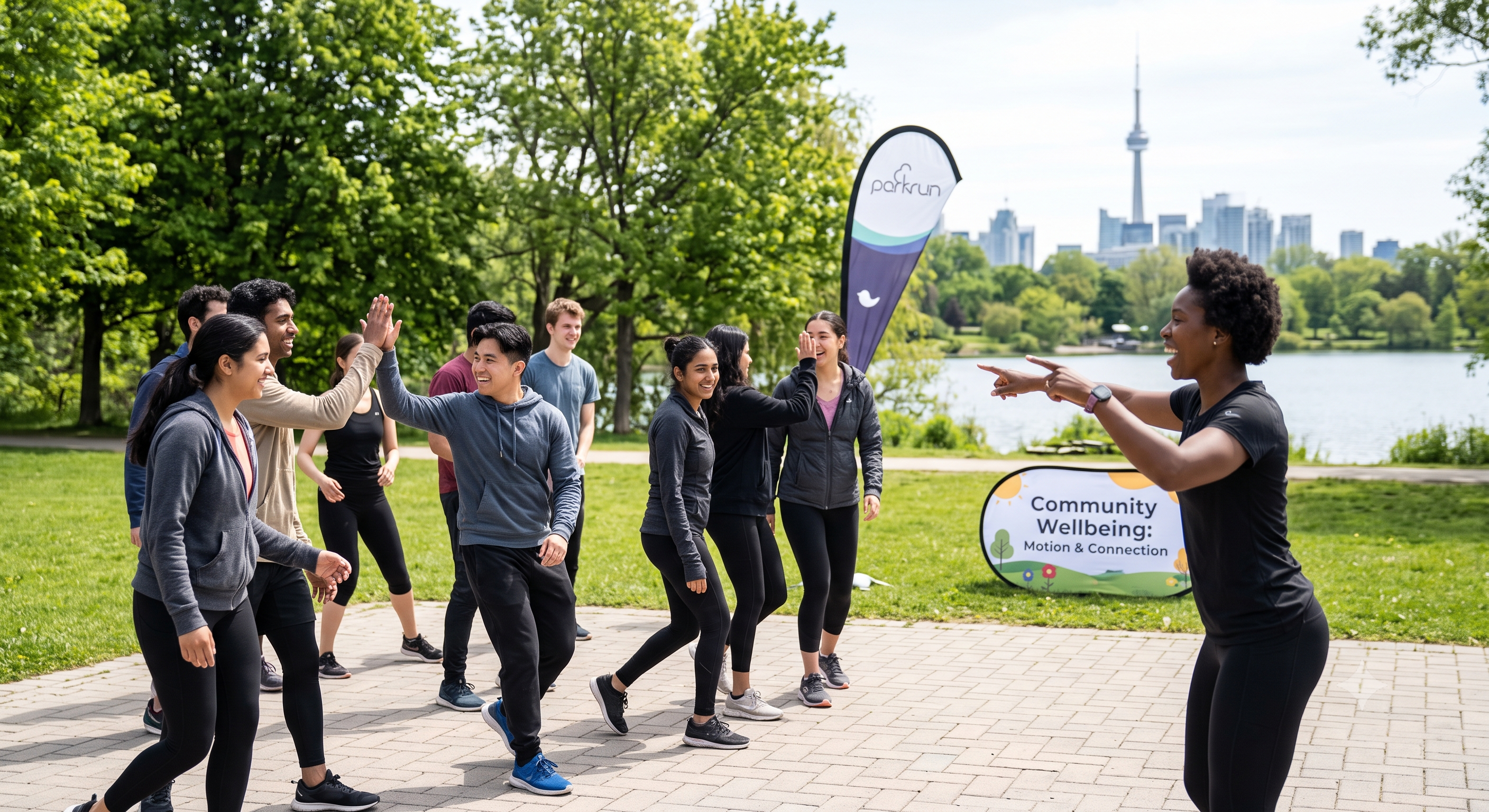
We often talk about exercise as physical medicine, but when you do it with other people, it becomes social medicine too.
A study led by researchers at the University of Oxford and UCL (published in Psychological Medicine) highlights just how potent group movement can be for youth mental health.
What the Research Found
The randomized controlled trial followed 121 young adults (ages 18–24) experiencing mild to moderately severe depressive symptoms over an 8-week salsa dance program:
Clinically Significant Relief: Participants in the salsa group saw a -2.45 point greater drop on the PHQ-9 depression scale compared to the waitlist control—surpassing the threshold for clinical significance.
Lower Social Anxiety: Beyond mood improvements, social anxiety levels dropped noticeably compared to non-participants.
Higher Daily Happiness: Group dancers reported a boost in everyday mood and emotional wellbeing.
Why Group Fitness Works Wonders
Why does something like group dancing or a group fitness class hit differently than solo cardio on a treadmill? It activates three psychological mechanisms at once:
Behavioral Activation & Flow: Learning a step pattern or following an instructor requires present-moment focus. It acts as an active form of mindfulness that pulls the brain out of depressive rumination loops.
Social Synchrony: Moving in unison with others fosters a sense of belonging and shared energy. It reduces the social isolation that frequently maintains depressive states.
Lowers the Barrier to Connection: In a structured class, social interaction happens naturally around a shared task. You don’t have to make forced small talk—you just move together.
The Takeaway: Physical activity releases neurochemicals like endorphins and BDNF (brain-derived neurotrophic factor), but group settings add the vital human connection component that solo workouts miss.
Social prescribing is a healthcare model where doctors and health professionals connect patients to non-clinical, community-based services to improve their health and wellbeing.
Instead of relying solely on medication or traditional talk therapy, social prescribing addresses the social determinants of health—like isolation, stress, and physical inactivity.
How Social Prescribing Works
The process usually follows a step-by-step pathway:
1.1. Referral from Healthcare Provider:Initial Contact.
A family doctor, nurse, or mental health specialist identifies that a patient is experiencing mild-to-moderate depression, anxiety, loneliness, or chronic stress. They refer the patient to a social prescribing program.
2.2. Consultation with a Link Worker:Co-Designing a Plan.
The patient meets with a Link Worker (also called a health coach or community connector). In an unhurried, 45–60 minute session, they discuss: “What matters to you?” rather than just “What is wrong with you?”
3.3. Community Connection:Active Engagement.
The Link Worker introduces the patient to local, low-barrier group activities tailored to their preferences, fitness level, and comfort zone—often arranging an warm introduction or accompanying them to the first session.
4.4. Review & Support:Ongoing Check-Ins.
The Link Worker checks in over 6 to 12 weeks to monitor progress, address barriers (like anxiety or transportation), and adjust recommendations as needed.
Commonly Prescribed Group Exercise Programs
Social prescribing programs favor activities that combine low intimidation, community bonding, and physical movement:
Program Type
What It Involves
Mental Health Benefits
Health Walking Groups
Guided, low-tempo outdoor group walks (e.g., Ramblers Wellbeing Walks, local nature walks).
Salsa, Zumba, line dancing, or beginner ballroom classes in community centers.
High behavioral activation; requires cognitive focus that interrupts depressive rumination while building social confidence.
Community Running / Parkrun
Free, inclusive 5k events or couch-to-5k walking/running groups.
Strong peer support network, sense of shared achievement, and structured weekly routine.
Gentle Yoga & Tai Chi
Low-impact, breath-focused group movement classes tailored for beginners or seniors.
Calms the nervous system (vagus nerve stimulation), reduces somatic anxiety, and improves mindfulness.
Green Gyms & Conservation
Group gardening, tree planting, and outdoor park maintenance.
“Exercise with a purpose”—delivers physical activity alongside a strong sense of community contribution.
Why it’s gaining momentum: Studies across healthcare systems (such as the NHS in the UK and expanding pilots in North America) show that social prescribing can reduce GP visits by 28% while measurably improving health-related quality of life and social connectedness.

Leave a Reply