
The Great Testosterone Rebrand: How TRT Went Mainstream
In a recent survey, 40% of men reported that their testosterone levels matter more to them now than they did just a year ago. Even more telling: nearly a quarter of men across generations currently know someone who’s on Testosterone Replacement Therapy (TRT).
Over the past decade, the way society thinks, speaks, and acts around testosterone has undergone a massive cultural shift. What was once whispered about in bodybuilder subcultures or hidden behind clinical taboos has quickly transformed into an open cornerstone of modern male health and longevity.

What changed? Here is a breakdown of how TRT evolved from a taboo shortcut to a mainstream wellness protocol.
1. From “Cheating” to “Optimization”
For decades, supplemental testosterone was viewed largely through two narrow lenses: a prescription reserved for severe medical hypogonadism, or an illicit, taboo shortcut used in bodybuilding circles.
Today, the narrative has fundamentally changed. Driven by the broader biohacking and wellness movements, TRT is now widely framed as a longevity protocol—a way for everyday men to maintain vitality, sharpen mental clarity, improve sleep quality, and preserve muscle mass as natural T levels decline by 1–2% each year starting in their mid-30s.
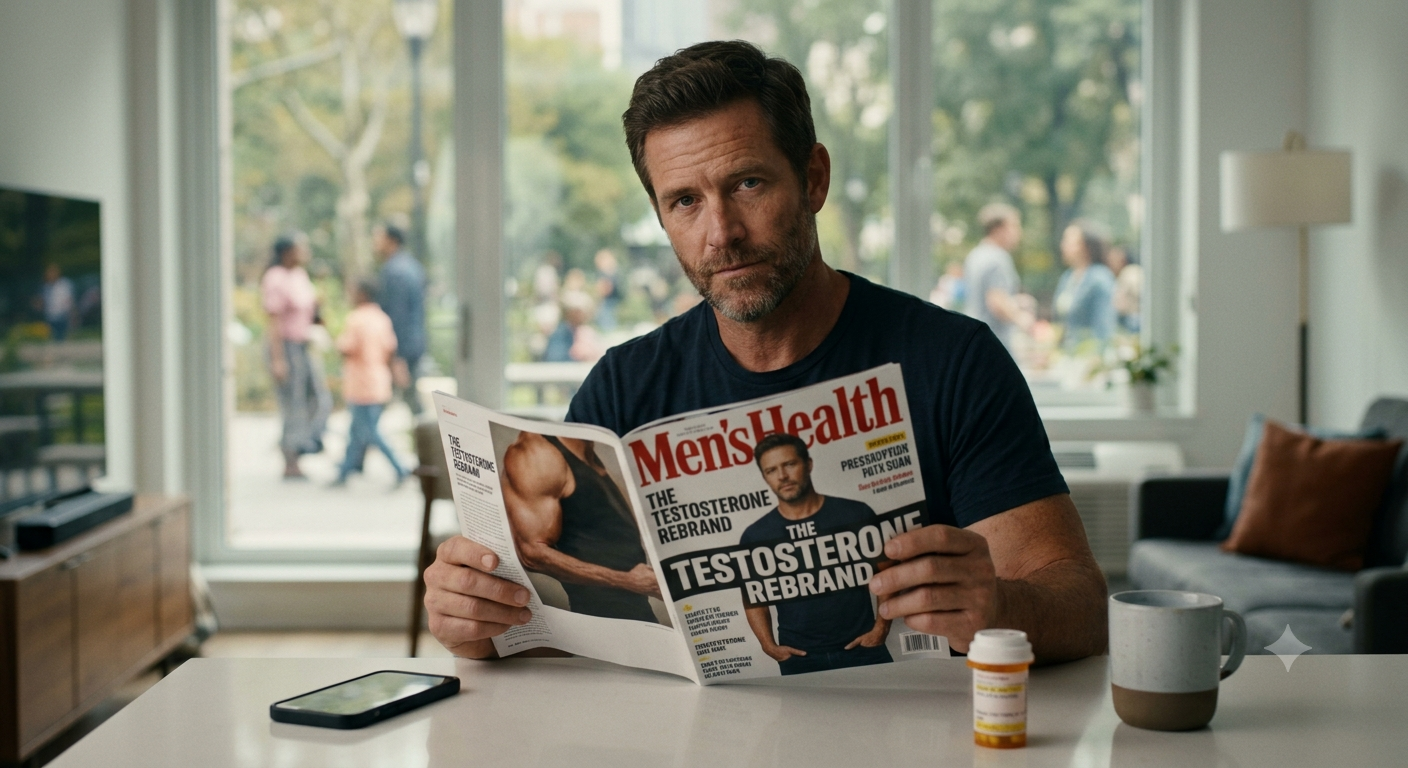
“Within a few years, testosterone had undergone a cultural rebrand from hush-hush hormonal helper to something more like a longevity protocol—the motor oil of the modern man’s body shop.” — Men’s Health: Testosterone Nation
2. The Influence of High-Profile Advocates
Public perception didn’t shift in a vacuum. A squad of highly visible podcasters, celebrities, influencers, and commentators—ranging from Joe Rogan and Andrew Huberman to actor Alan Ritchson—have spoken candidly about their own TRT regimens.
By framing hormone therapy as a transparent tool for energy, mood, and recovery rather than something to hide, these public figures stripped away decades of social stigma.
3. Shifting Medical Evidence & Safety Clarity
In the early 2010s, concerns over potential cardiovascular risks led the FDA to issue warnings on testosterone products, causing prescribing rates to decline.
However, major landmark studies—most notably the landmark TRAVERSE clinical trial involving over 5,000 men—found that testosterone therapy was not associated with an increased risk of major adverse cardiac events in men with hypogonadism. These updated safety findings led regulatory agencies to revise box warnings, giving both clinicians and patients greater confidence to re-evaluate treatment options.
4. Telehealth and Direct-to-Consumer Access
Getting evaluated for low testosterone used to require navigating multiple specialist appointments and laboratory referrals.
The rise of specialized men’s health platforms and telehealth services simplified this process significantly. According to data analyzing prescribing trends, U.S. testosterone prescriptions jumped from roughly 7.3 million in 2019 to over 11 million in recent years, driven by:
- At-Home Blood Testing: Simple blood draws and online lab consultations.
- Personalized Care: Direct access to specialized clinical teams.
- Demystified Symptoms: Better public awareness around fatigue, brain fog, and low libido as treatable hormonal issues rather than inevitable parts of aging.
Sources & Further Reading
- Men’s Health: Testosterone Nation & Evolution
- Epic Research: Testosterone Prescribing Rates Rising Again
- Levels Health: Guide to Testosterone Replacement Therapy
- U.S. Pharmacist: Nationwide Patterns in TRT
Leave a Reply