
We’ve all been there: you stayed up way too late scrolling, working, or tossing and turning, but you still drag yourself to the gym at 6:00 AM because “consistency is king.” You might even think a tough workout will wake you up.
But according to recent research published in the Scandinavian Journal of Medicine & Science in Sports, pushing through a heavy lifting or training session on short sleep triggers a physiological survival mode that does more harm than good—especially for men.

The Hidden Trap: “Fat Burning” Isn’t Always a Win
The study took recreationally trained adults through normal sleep, partial sleep deprivation (4 hours), and total sleep deprivation (0 hours) before testing their metabolism during exercise.
The immediate finding sounds like a fitness headline dream: sleep deprivation shifted their bodies into burning more fat (lipolysis) and fewer carbohydrates during exercise. Total sleep deprivation boosted maximal fat oxidation by 16%.
Before you start planning all-nighters to get lean, here is the catch: this isn’t a metabolic perk; it’s a critical stress response.
Your body shifts to burning fat because it’s desperate. It is locking down its preferred, highly efficient fuel source (carbohydrates) to protect your brain, leaving your muscles to rely on a slower, less efficient energy pathway.
How This Systemic Strain Specificially Attacks Men’s Performance
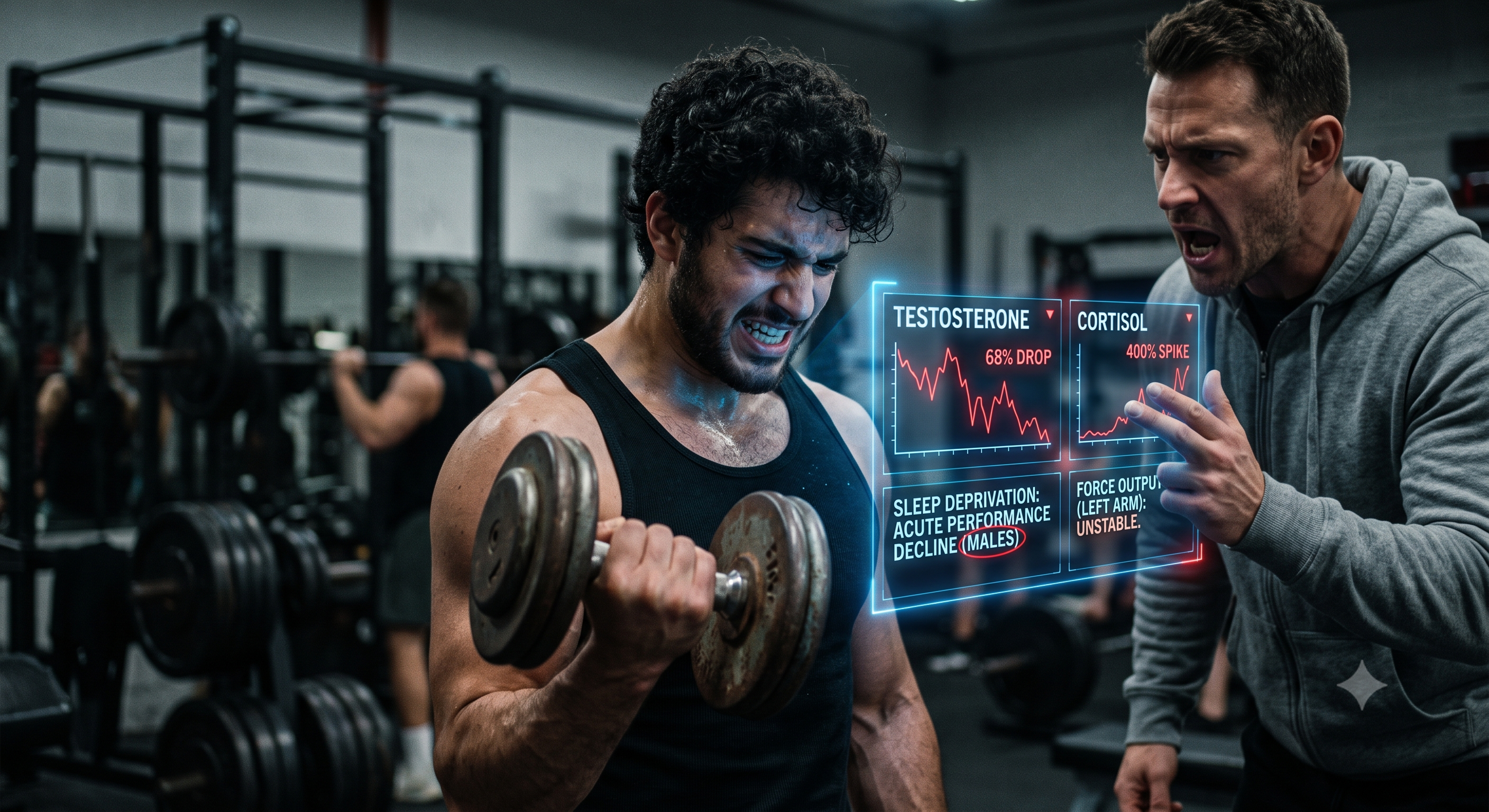
While both sexes experience the metabolic panic switch, companion data from the same research team shows that sleep deprivation hits male performance metrics with a unique punch:
- The Power Drop: For men, even partial sleep deprivation (getting just 4 hours) causes a significant 7% to 13% drop in movement velocity during moderate-load explosive movements (around 50% of your 1-Rep Max). Women in the study didn’t see this same explosive power drop from short sleep.
- The Cardiovascular Tax: Across the board, sleep restriction forces your body to run hot. Resting heart rate climbs by roughly 5% and systolic blood pressure jumps by about 6%. Your heart is working significantly harder just to keep you upright.
- Perceived Exhaustion: The exact same weight feels vastly heavier. Subjective fatigue and ratings of perceived exertion (RPE) skyrocket, which completely destroys your mental drive and form.
When you mix a higher heart rate and elevated blood pressure with a 13% drop in explosive muscle power, you aren’t building a better physique—you are forcing a compromised, highly stressed cardiovascular system to battle an uphill war.
Your Game Plan for the “Morning After”
If you find yourself running on four hours of sleep, don’t try to be a hero. You can still move your body, but you need to change the goalpost for that session.
- Ditch the PRs: Avoid lifting anywhere near your 1-Rep Max or attempting explosive, high-velocity movements. Your nervous system simply isn’t firing fast enough to keep you safe.
- Shift to Low-Stress Volume: Swap the heavy barbell work for controlled, moderate machine work or a steady-state cardio session where you can monitor your heart rate.
- Prioritize Cooling Down: Sleep deprivation disrupts your body’s ability to thermoregulate (manage its temperature). Keep a cold water bottle handy, work out in an air-conditioned space, and don’t overheat yourself.
Consistency matters, but knowing when to shift gears is what keeps you in the game for the long haul. If the sleep wasn’t there, take it easy, save the heavy weight for tomorrow, and focus on recovery.
Leave a Reply