For nearly a decade, boutique spin studios were the crown jewels of the fitness industry. Darkness, neon lights, high-decibel playlists, and synchronized pedaling created a nightclub-like atmosphere that packed studios nationwide.
Then the music stopped.
1. The Peak and the 4-Million-Rider Drop
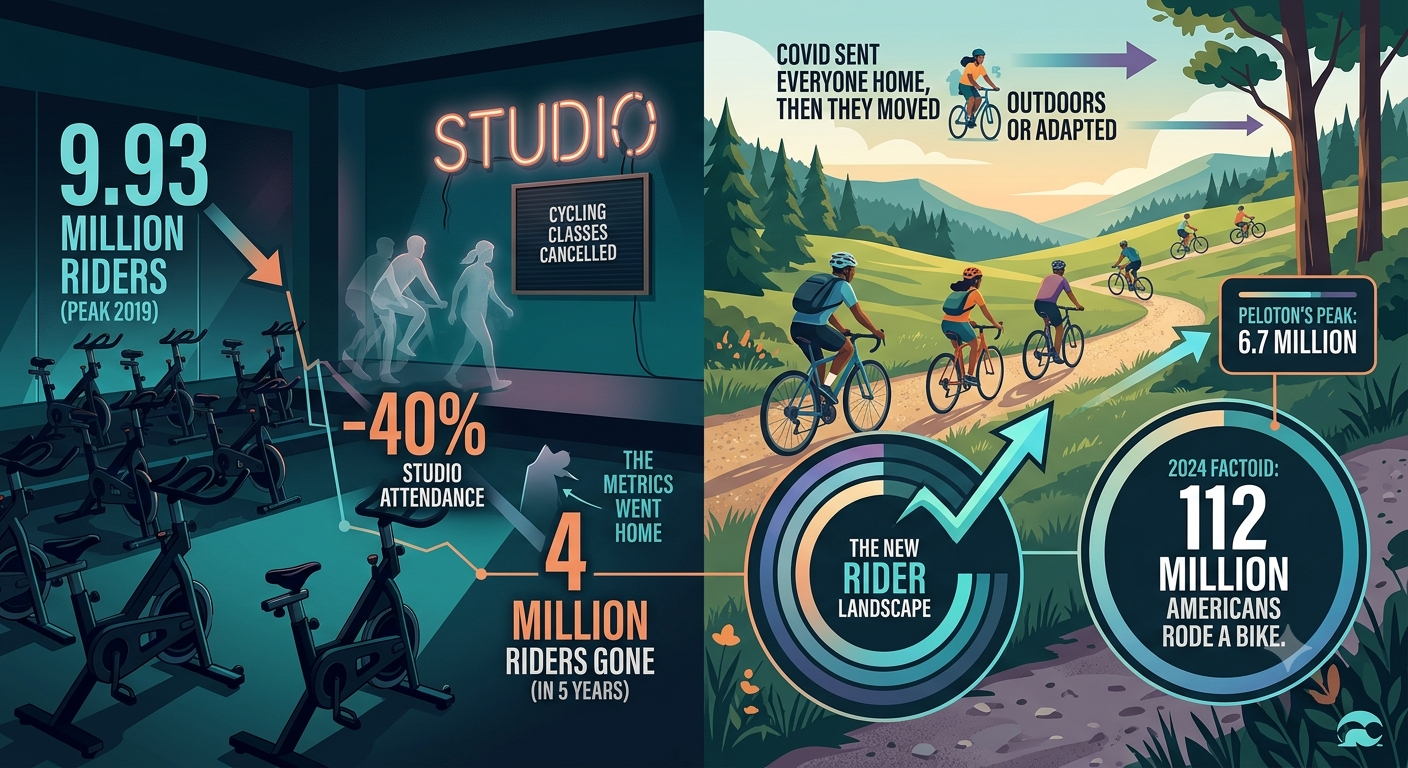
Data from industry research and the Sports & Fitness Industry Association (SFIA) shows that studio cycling reached its absolute high-water mark in 2019, boasting 9.93 million active participants in the United States.
Fast-forward through the post-pandemic reshuffle: by 2023, that number plummeted to roughly 6 million participants—a steep 40% drop in studio attendance over five years. Nearly 4 million riders left the studio floor, leaving behind empty bikes, shuttered boutique locations (like Flywheel), and shrinking class schedules.
2. COVID Sent Everyone Home — and Connected Tech Took Over
When pandemic lockdowns shuttered fitness facilities in 2020, riders didn’t stop pedaling; they changed locations. Connected fitness platforms surged to fill the void:
Peloton’s Peak: At its zenith, Peloton grew its ecosystem to over 6.7 million members globally.
Smart Trainers & Apps: Outdoor cyclists and fitness enthusiasts embraced platforms like Zwift, TrainerRoad, and Wahoo, realizing they could replicate—or surpass—the indoor workout experience without commuting to a gym.
The Shift: The core value proposition of indoor cycling—convenience, sweat, and performance tracking—was successfully digitized.
3. Where Did the Riders Go?
If 4 million people stopped taking indoor spin classes, where are they now? The data points to three clear destinations:
A. They Moved Outdoors
Interest in riding bikes remains massive. According to participation data, 112 million Americans rode a bicycle in 2024 across all categories. The pandemic fueled a sustained surge in outdoor cycling, particularly in e-bikes, gravel riding, and recreational family rides. People didn’t fall out of love with cycling; many simply preferred real pavement and trail air over a stationary room.
B. They Switched Fitness Trends
Fitness preferences evolved rapidly between 2021 and 2025. Former spin regulars migrated en masse toward:
Strength & Sculpting: Heavy resistance training and functional fitness (like Hyrox) became the dominant trend, particularly among women.
Reformer Pilates: Low-impact, core-intensive workouts experienced a massive resurgence, stealing market share directly from traditional cardio formats.
C. Big Gyms Reclaimed the Space
Recognizing changing demand, major fitness chains—including Life Time, LA Fitness, and regional health clubs—began systematically cutting or scaling back cycling classes. In many locations, underutilized spin studios have been renovated into Pilates Reformer rooms, functional strength zones, or turf spaces that yield higher member engagement per square foot.
4. “The Metrics Went Home”
Early spin classes were built around vibe, community, and rhythm. However, as indoor cycling matured, riders became increasingly data-driven, demanding precise feedback on power output (FTP), cadence, heart-rate zones, and caloric burn.
Once smart bikes and home setups made high-grade telemetry readily available on personal screens, the studio lost one of its biggest advantages.
While boutique cycling hasn’t disappeared entirely, its role has changed. It is no longer the undisputed engine of the group fitness world, but rather a specialized niche in a broader, more diversified fitness landscape.


Leave a Reply