
Swimming to Happiness: The Ultimate Secret to Beating Frailty as We Age
Think growing older means you have to hang up your swimsuit and settle for a rocking chair? Think again!
When we think of aging, we often picture “frailty” as an inevitable package deal. But science tells us a very different story. While aging is a normal physiological process, frailty—a medical condition that leaves the body vulnerable to health stressors and decline—is completely preventable.
The single best defense against it? Moving your body. Yet, despite the massive benefits, only about 15% of older American men and 10% of women get enough physical activity. A recent article published in the American Journal of Lifestyle Medicine highlights exactly why we need to change that narrative—and it all starts in the pool.

The 96-Year-Old Who Swims to Survive—and Thrive
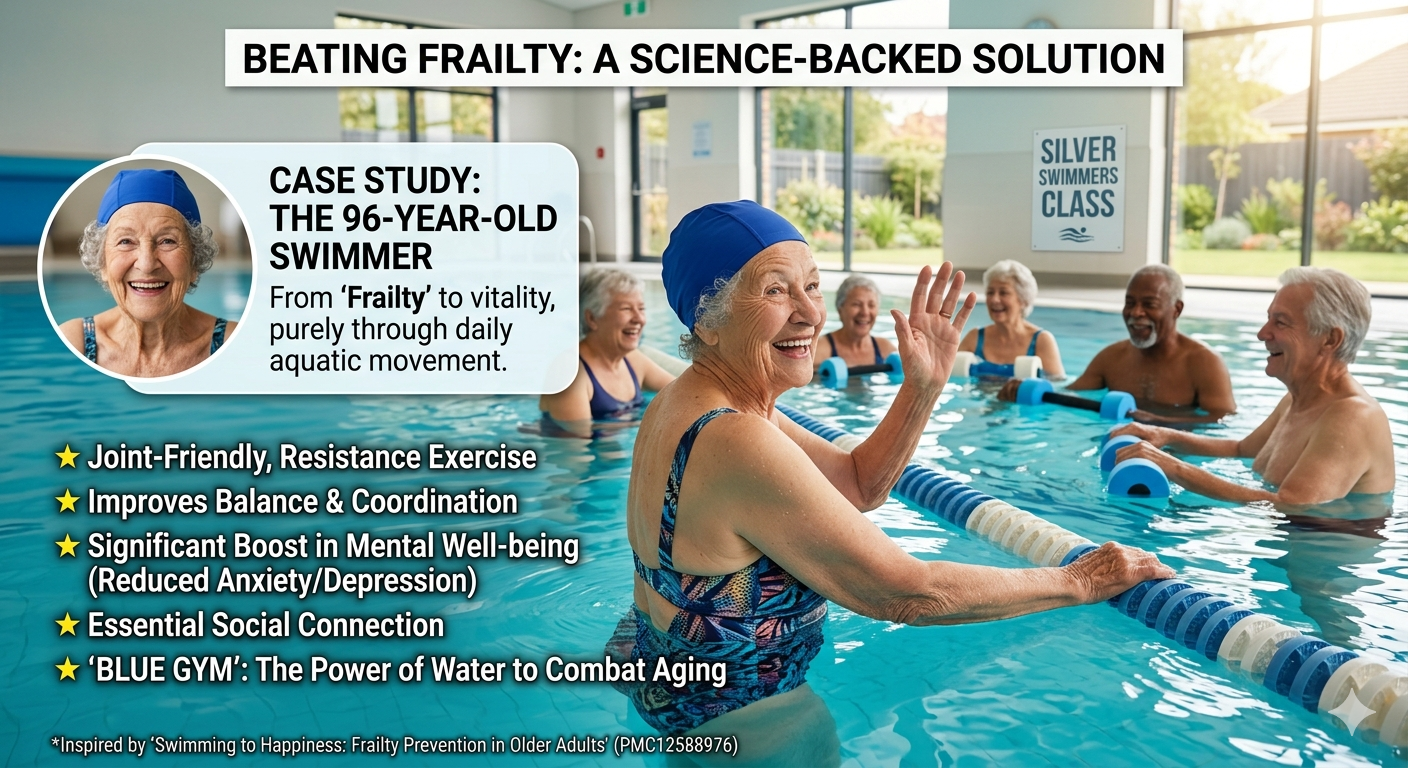
To understand the power of the pool, look no further than the study’s inspiring case subject: a 96-year-old woman who didn’t even take up swimming until she was in her seventies.
After losing her husband of 53 years, she discovered that the water offered her more than just physical exercise; it offered profound emotional solace. Swimming became her daily ritual. It reduced her anxiety, helped her process grief, and allowed her to maintain total independence in her daily life.
When pandemic lockdowns temporarily took the pool away, her mental health plummeted. But once she was back in the water, her mood completely stabilized. In fact, her daily swims were so therapeutic that, with her doctor’s support, she was finally able to taper off anti-anxiety and depression medications she had been taking for 30 years. Today, at 99 years old, she still swims for an hour every single day and continues to age gracefully.
Why Swimming is a Superpower for Older Adults
Why is the pool such a fountain of youth? Here’s what the science says:
- Zero-Gravity Workouts: Water buoyancy takes the pressure off aging joints. It reduces pain and the risk of injury, making it the perfect exercise for anyone dealing with arthritis or mobility issues.
- Cardio Meets Resistance: Water provides natural resistance. Swimming builds muscle strength, boosts cardiovascular health, and improves lung capacity—all at the same time. Studies even show it improves macro- and microvascular function.
- The Magic of “Blue Spaces”: There’s a reason we feel so calm near the water. Engaging with aquatic environments naturally lowers stress, drastically improves mood, and combats depression.
- Community Connection: Group water aerobics or simply chatting in the lap lanes helps fight loneliness and social isolation, two massive risk factors for cognitive decline, anxiety, and physical frailty in older adults.
It’s Never Too Late to Dive In
The idea that “sports are only for young people” is a dangerous myth. Whether it’s swimming laps, doing high-intensity aquatic intervals, or just taking a water aerobics class, water-based exercises are proven to be just as effective as land-based workouts for improving balance, endurance, and flexibility.
You don’t have to be an Olympic athlete to reap the rewards. Just getting in the water can boost your mood, protect your brain, and shield your body against the effects of aging.
If you or a loved one are looking for a way to stay strong, happy, and independent, it might be time to grab some goggles and dive right in. After all, if a 99-year-old can crush a daily one-hour swim, what’s stopping the rest of us?
Based on the medical case report: “Swimming to Happiness: Frailty Prevention in Older Adults” by Halina Kusz, MD, et al. (PMC12588976).
Leave a Reply